
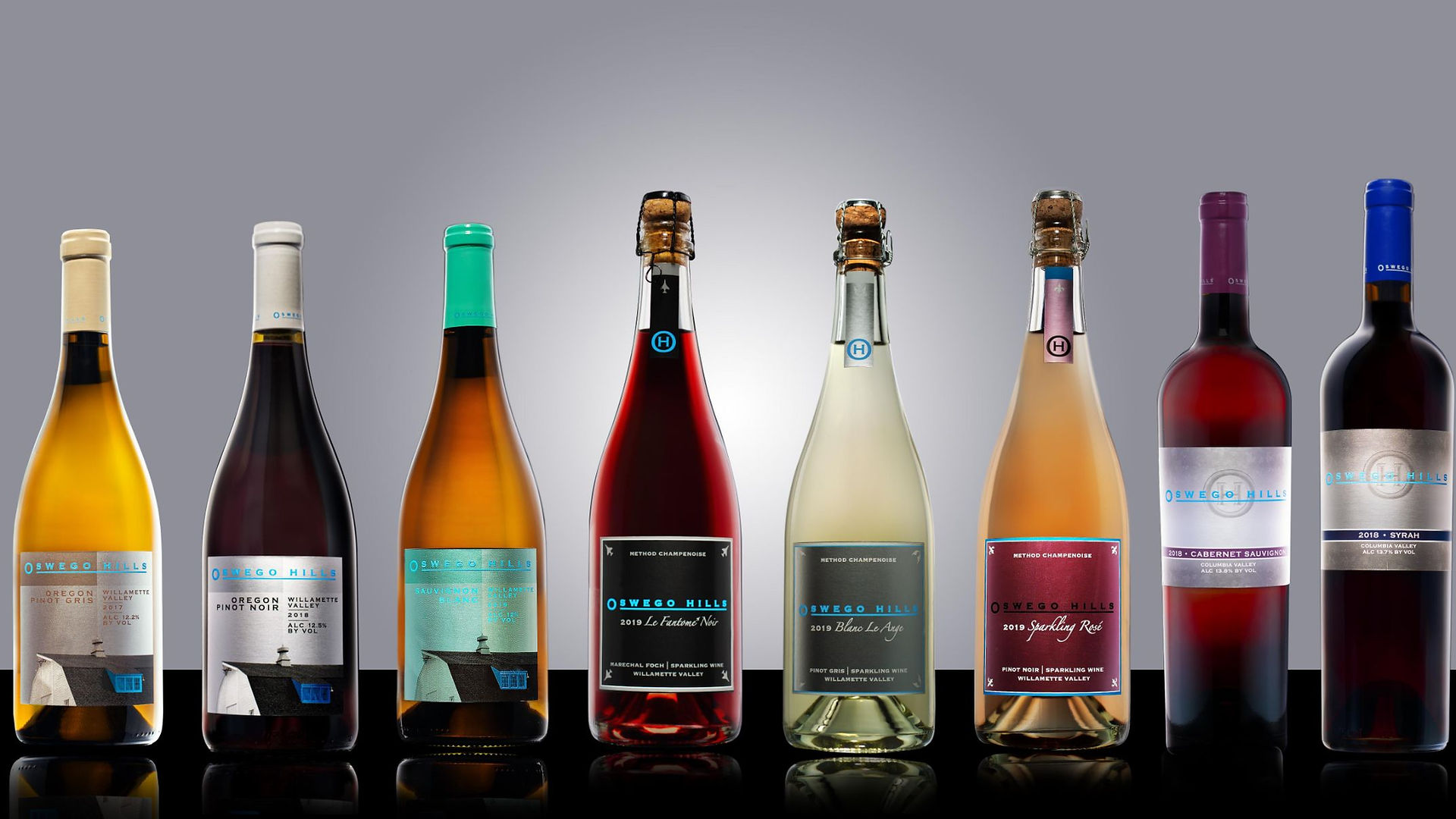
Avery’s Blend
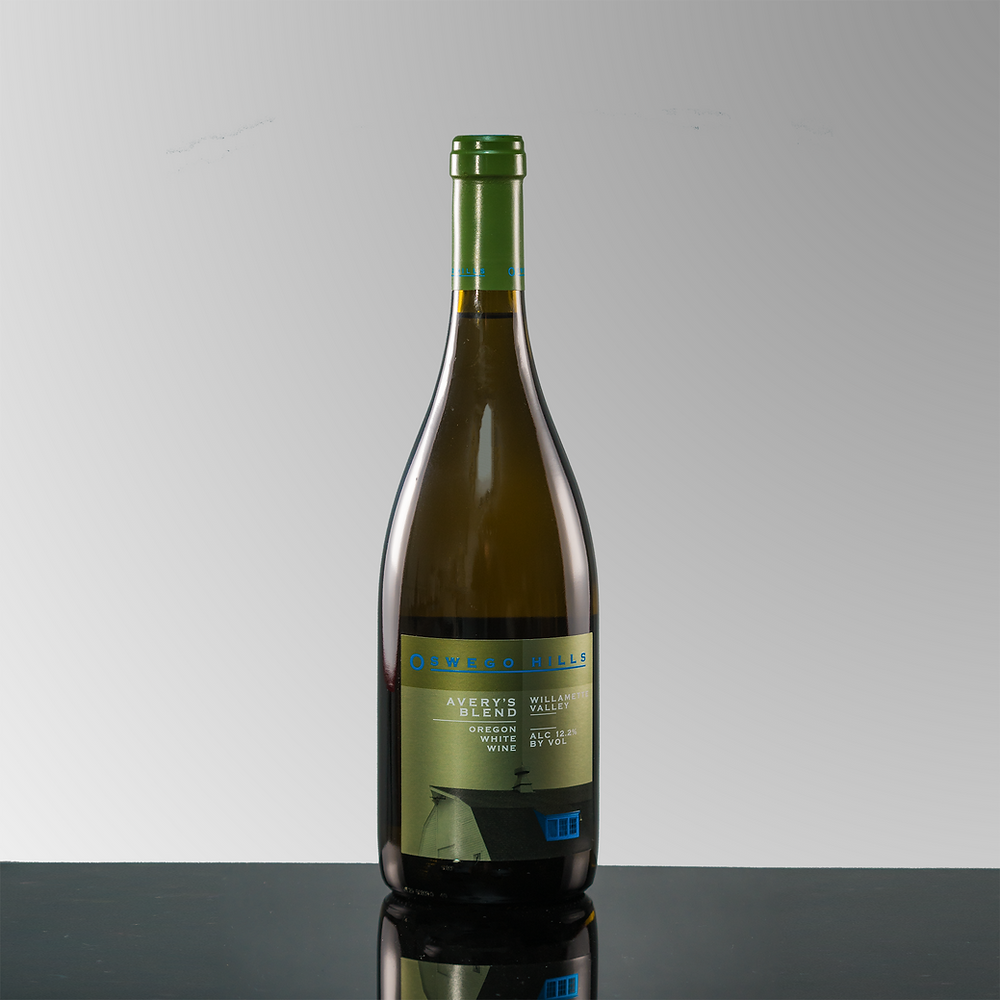
Dubbed the “Ladies Wine”, this is a classy blend of Pinot Blanc, Pinot Gris, Riesling and Viognier. Specially selected fruit sourced from our own vineyard as well as two neighbors serve as the backbone for Avery’s Blend. If you’re looking for a smoother, full bodied white wine lacking the nutty, oaky, buttery characteristics of many Chardonnays then this is the pairing for you.
Avery’s Blend is named after the eldest of our children. This harmonious wine combines the refreshing pear, apple and crisp lemon-lime flavors of Pinot Gris and Riesling with intense honeydew, mineral and grapefruit flavored Pinot Blanc. To finish of this Chablis style blend we add Viognier, a full-bodied, intensely aromatic grape loaded with exotic floral fragrances and flavors of delicious stone fruits.
Serving Avery’s Blend only at the winery, we have created a gorgeous alternative which has been favorable to the Chardonnay crowd looking for something different to try. In addition to the traditional white wine food pairings, Avery’s Blend has been a hit with the salads (in particular the vinaigrette’s) as well as spicy dishes and rich sauces. The body from the Viognier helps cut through heavy stuff while the lively acidity from the Blanc, Gris and Riesling help balance off a delightful finish leaving you ready for more.
$25.00 per bottle | $127.00 per 6-pack | $240.00 per case | 95 cases produced
Chardonnay
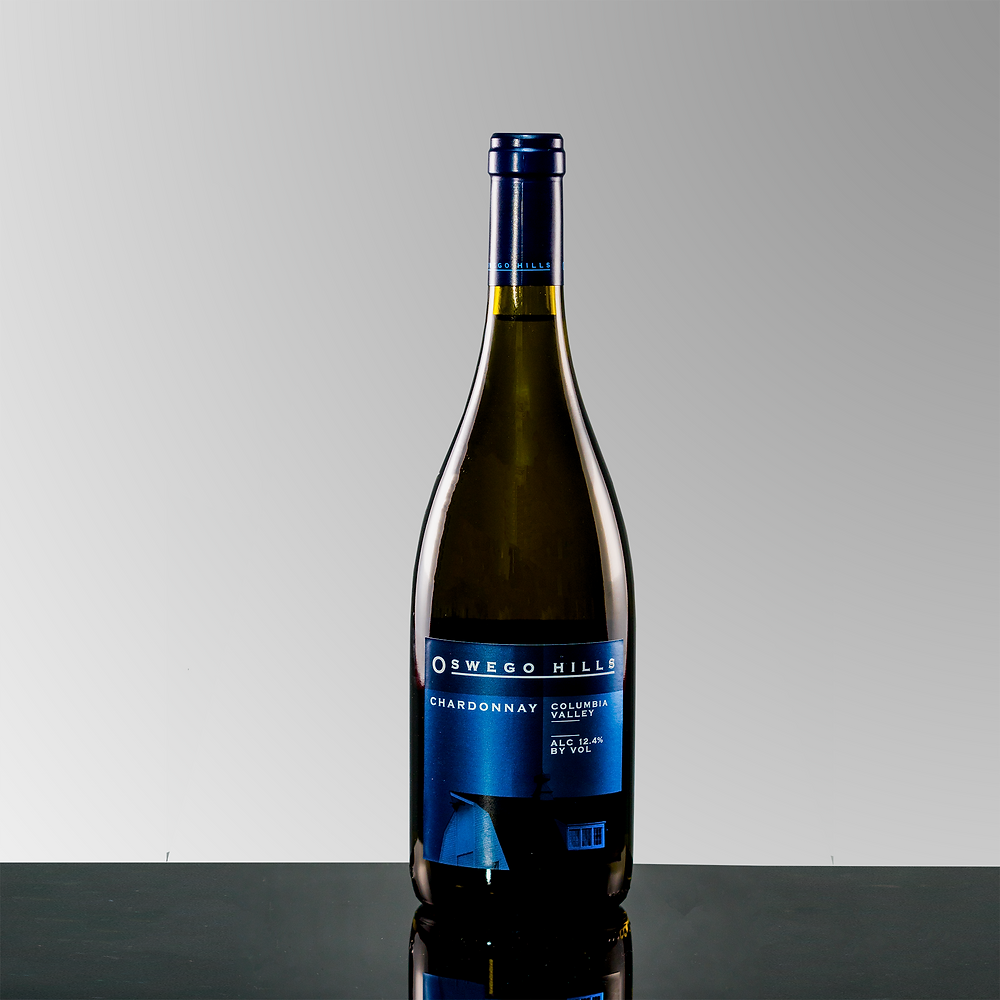
Chardonnay is the true noble white wine grape of the world. It is clearly the most popular white wine consumed throughout the world. Chardonnay is grown wherever wine is produced, throughout Europe, to Oceania, to France, California, Oregon, Washington, South America, South Africa, and Asia.
There are over 400,000 acres of Chardonnay planted worldwide. This is second only to Airen among white grapes and more than many red varieties. Several ampelographers have tried to trace the origins of Chardonnay to France, to the Middle East (Lebanon & Syria), and to Cyprus as an indigenous vine.
Modern DNA evidence now supports that Chardonnay is a cross between Pinot and Gouais Blanc. It is believed that the Romans brought Gouais Blanc from the Balkans to Eastern France. The local peasants then cultivated Gouais Blanc, and it quickly interbred with the Pinot Blanc which had been planted by the French aristocracy.
As of 2006, there are now 34 different clonal varieties of Chardonnay. Several other notable grapes have also been propagated from Chardonnay such as Aligote, Auxerrois, Beaunoir, Gamay Noir, Melon, Peurion, Roublot and Sacy to name a few. Chardonnay is also a terroir driven grape.
Cooler climates, such as Burgundy, Champagne and Oregon, produce leaner, crisper, higher acid wines, whereas warmer climates, such as Australia or California bring out more of the honey and tropical fruit flavors. Chardonnay seems to adapt to most soils, however, it appears to like limestone, chalk, and clay based soils the best. Stylistically, Chardonnay is used to make the famed White Burgundy, Champagne and Chablis wines as well as the oaky, California, New World wine.
The Chardonnay spectrum grew immensely when Chateau Montelena defeated the top French White Burgundies at the famous Paris tasting of 1976. Chardonnay was off and running in the United States, and its popularity skyrocketed into becoming the most popular white wine in the world. The two main decisions a winemaker must make with Chardonnay are whether or not to use malolactic fermentation and how much oak exposure for the wine.
Chardonnay that has not gone through malolactic fermentation and has limited oak exposure will taste like green apple, pear, and lemon, and have more steely, mineral and acidic notes. To the contrary, Chardonnay that completes malolactic fermentation and ages on the lees in an oak barrel will produce a nutty, buttery, almost creamy wine that has flavors of caramel, smoke, coconut, and vanilla. Chardonnay is not an aromatic wine like Sauvignon Blanc, Gewurztraminer or Viognier, and styles of winemaking are regional.
Due to a wide range of styles, Chardonnay pairs well with a variety of foods. Chicken, turkey, fish, seafood and even heavier or spicy pairings will not overpower Chardonnay. The popularity of Chardonnay has created somewhat of a backlash over the years, as it became the fashionable, white wine of the 20th century.
Occasionally, people will find the new white wine of the year when they are looking for the “ABC-anything but Chardonnay” alternative, but they always manage to comeback to what they’re comfortable with…….a cool glass of “Chard.” To this day, Chardonnay consumption dwarfs the other white wines of the world.
Oswego Hills Chardonnay
Our grapes are sourced from a warm, southwest facing, rocky hillside just south of Red Mountain, Washington. Our goal is to create a full-bodied wine characteristic of the nutty, creamy, smoky and vanilla tones expressed in our fruit.
Primary and malolactic fermentation took place slowly in 100% new French Oak sourced from Chatillon and Fontainebleau. Battonage, the stirring of the lees, occurred monthly to allow more pineapple and tropical fruit flavors to extract in the wine. This wine differs significantly from our other whites since they are solely produced in stainless steel.
If you are looking for a hardier alternative with less acid and a rich finish, try pairing our Chardonnay with buttered scallops, Dungeness crab, creamy pastas, or roasted chicken. Chardonnay is flexible. It can be a stand-alone wine or a wonderful compliment to any meal.
$25.00 per bottle | $127.00 per 6-pack | $240.00 per case | 98 cases produced
Pinot Gris
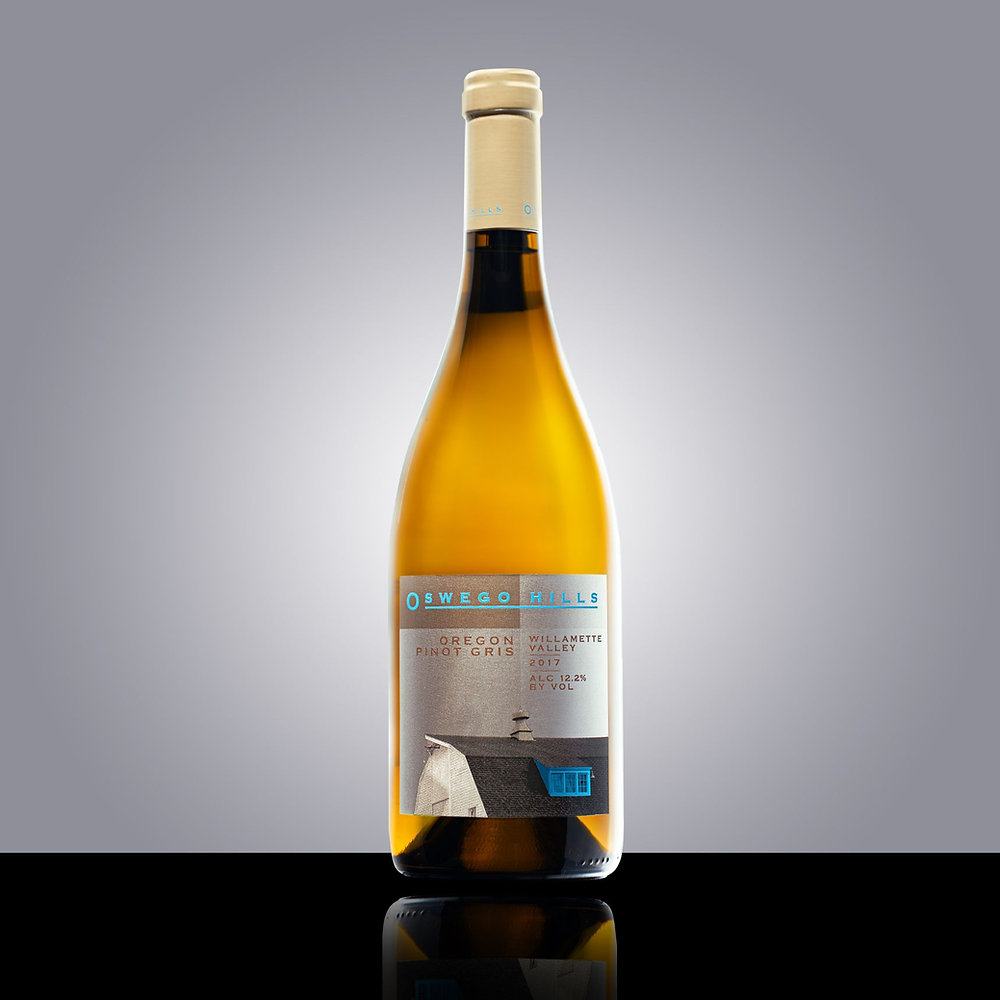
Pinot Gris is another mutation of the genetically unstable Pinot Noir and is still struggling to determine if it is in fact a dark or light grape. Skin colors of grey to brownish pink to dark bronze to white are characteristic to the eleven different types of Pinot Gris grown worldwide. Known as Tokay d’Alsace in France, Rulander in Germany and Pinot Grigio in Italy, Pinot Gris has rapidly become one of the white wine treasures of the world.
Stylistic differences between the wine regions have given Pinot Gris a unique quality which is characteristic to their appellation. Full bodied, oily textured wines characterize the Tokay d’Alsace style whereas lighter and fizzy is more common with the Italian Grigio. Here at Oswego Hills, we strive for an intense, vibrant, and clean as a whistle Gris sans the oil and the fizz.
Our style creates a wine loaded with flavors of apple, honeydew, pear, citrus, and a light grapefruit finish. Lively acidity with a crisp, refreshing, lengthy finish is the key to Gris. Last year we hit the mark and are ecstatic about the release of our newest vintage.
This Pinot Gris has everything we could have asked for and the feedback has indicated we really hit this one out of the park. Pinot Gris is so versatile and really compliments about any occasion. Whether you are sitting out on your patio during a hot day or serving it with just about any meal, Pinot Gris will fit the bill.
Versatility with spicy food, fruits, cheeses, chicken, seafood, pasta, and bread that hurts when you chew it is a perfect match for this lovely wine.
$25.00 per bottle | $127.00 per 6-pack | $240.00 per case | 625 cases produced
Sauvignon Blanc
Sauvignon Blanc was an indigenous grape from the Bordeaux Region and Sancerre Appellation of the Loire Valley of Southern France. The grape gets its name from “sauvage” (wild) and “blanc” (white). The grape origin has been traced back to the 18th century when a Savagnin vine was paired with a Cabernet Franc.
Since then, cuttings made their way to various wine growing regions throughout the world including, Australia, Canada, Chile, Italy, Romania and South Africa. Sauvignon Blanc was introduced to California in the 1880’s and has seen additional plantings in both Oregon and Washington. The grape was introduced to New Zealand in the 1970’s and has since become their most popular white wine on the market.
Sauvignon Blanc is one of the most widely planted wine grapes in the world and because of this it has a wide range of styles and flavors that resonate with consumers from the general public. Sauvignon Blanc ranges from unripe flavors of malic acid, lime, pepper, and grass to medium ripeness flavors of apple, gooseberry, and pear to fully ripe passion fruit and peaches. While most wine grapes have very distinctive profiles, Sauvignon Blanc has a wide array of aromatics, minerality, and flavors dependent on viticulture and winemaking techniques.
The aromatics of Sauvignon Blanc are distinctive and relatively simple, so it is not surprising that it was one of the first to be explained in terms of the dominant flavor compounds, called methoxypyrazines. This is a cool name to drop when you are sitting around a professional wine tasting group. Most Sauvignon Blanc’s are made dry or a small amount of residual sugar to add more texture.
Some winemakers will barrel ferment and age their Sauvignon Blanc to introduce more vanilla, butterscotch, caramel and pie crust flavors to downplay the acidity and fruit. While Sauvignon Blanc can have a multitude of flavors and stylistic differences between winemakers, the popularity of the wine cannot be denied. Whether you are a gentle flora eater or a fauna killing savage, the food pairings with Sauvignon Blanc are limitless.
Anything green from herbs and vegetables, soft and strong cheeses, to meats including chicken, pork, crab, fish, turkey and shellfish work fabulous with the medium acidity and flavor profile of Sauvignon Blanc. If you are a hardcore Chardonnay fan for its ability to never go out of style, you may just want to immerse yourself in Sauvignon Blanc for a change. Before you know it, Sauvignon Blanc may just steal your heart.
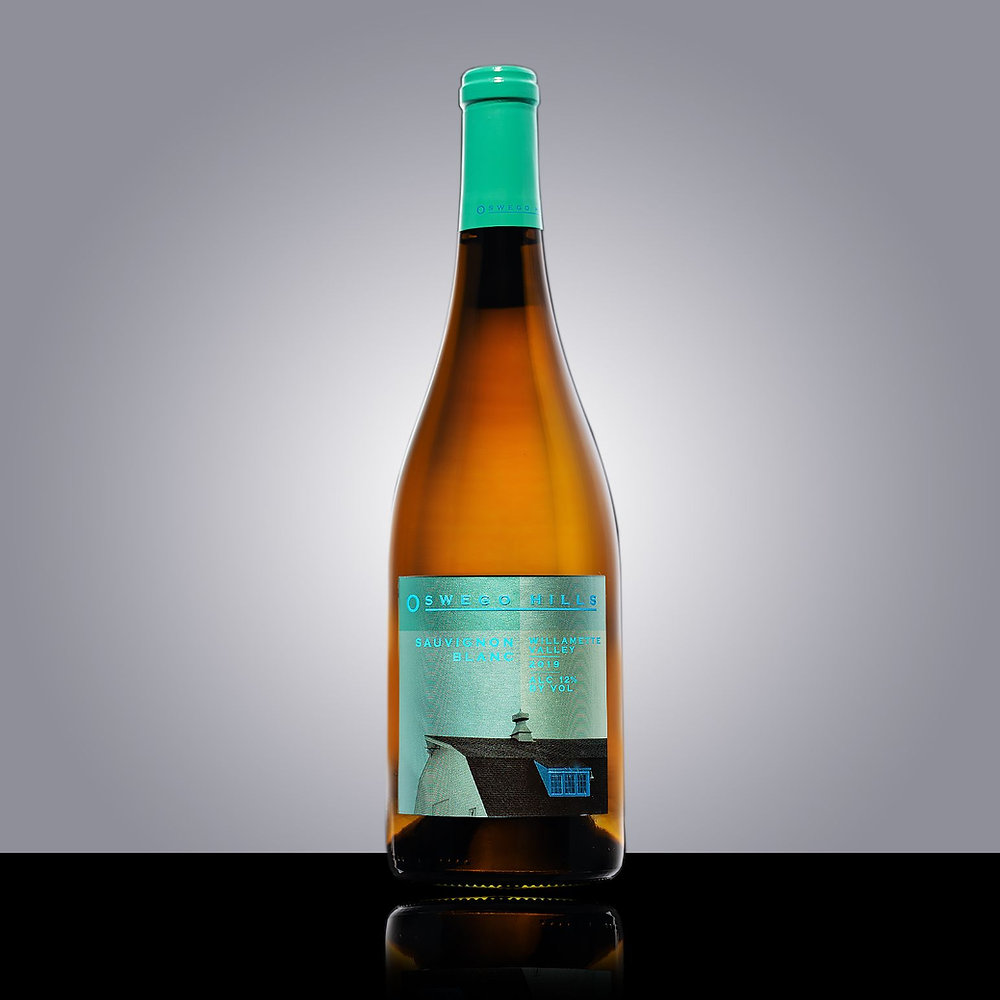
Oswego Hills Sauvignon Blanc
Oswego Hills Sauvignon Blanc has an inclusive array of minerality, aromatics, and flavors of flint, lemongrass, citrus, kiwi, peach, and tropical fruits. A medium acidity and naturally refreshing balance from oak aging make this distinctive wine a great food pairing or stand-alone option to enjoy with family and friends.
$25.00 per bottle | $127.00 per 6-pack | $240.00 per case | 190 cases produced
Viognier
Viognier is an ancient white grape that can be traced back to Dalmatia. The Romans brought it to Rhone France about 2000 years ago. Once, a common grape, Viognier was almost to the point of extinction in the late 1960’s as only 30 acres were planted in all of France including 8 acres in Northern Rhone.
Phylloxera infestation and WWII chaos were the main culprits and Viognier remained endangered until the 1980’s. Since that time, the popularity of the wine, as well as the price, has risen and thus the number of plantings has increased. Large plantings of Viognier can now be found in Australia, Brazil, California, Oregon, Washington, Languedoc and Rhone.
The main drawback to Viognier is that it is a very shy producer and difficult to grow. Low yields and susceptibility to damp conditions and humidity make cultivation difficult and thus prices are usually higher. Viognier fruit has low acids and a dark golden color for a white wine.
The best quality of Viognier is its intense aromatics. It is well known for its floral and fruit aromas, due to terpenes, which are also found in Muscat and Riesling wines. Overripe stone fruits, orange blossoms, honey, mango, tangerine, kiwi, and acacia all have used to describe Viognier.
Viognier typically does not see an oak barrel, however, it has enormous body and mouth feel that make it a hit with the Chardonnay drinker. Viognier can have the body of a nutty, oaky, buttery Chardonnay, but it has a much more distinctive fruit characteristic. As a result, Viognier has become a preferable alternative to someone looking for something besides Chardonnay.
The sexiness of Viognier is its powerful, rich, complex aroma. The most famous Viognier has come from the Northern Rhone appellations Condrieu and Chateau-Grille! Viognier is also used in blending with Syrah in Cote Rotie and with several Australian producers.
In the United States, we are just producing it as a single varietal. For some people, Viognier can be a little strong or overbearing to the palate. A single glass can go a long way but this also adds interest to food pairings.
Spicy dishes, Asian stir-fry, curry, Thai food, fruit salsa, and salads with Caesar or Vinaigrette dressing can be immensely tasty with a glass of Viognier.
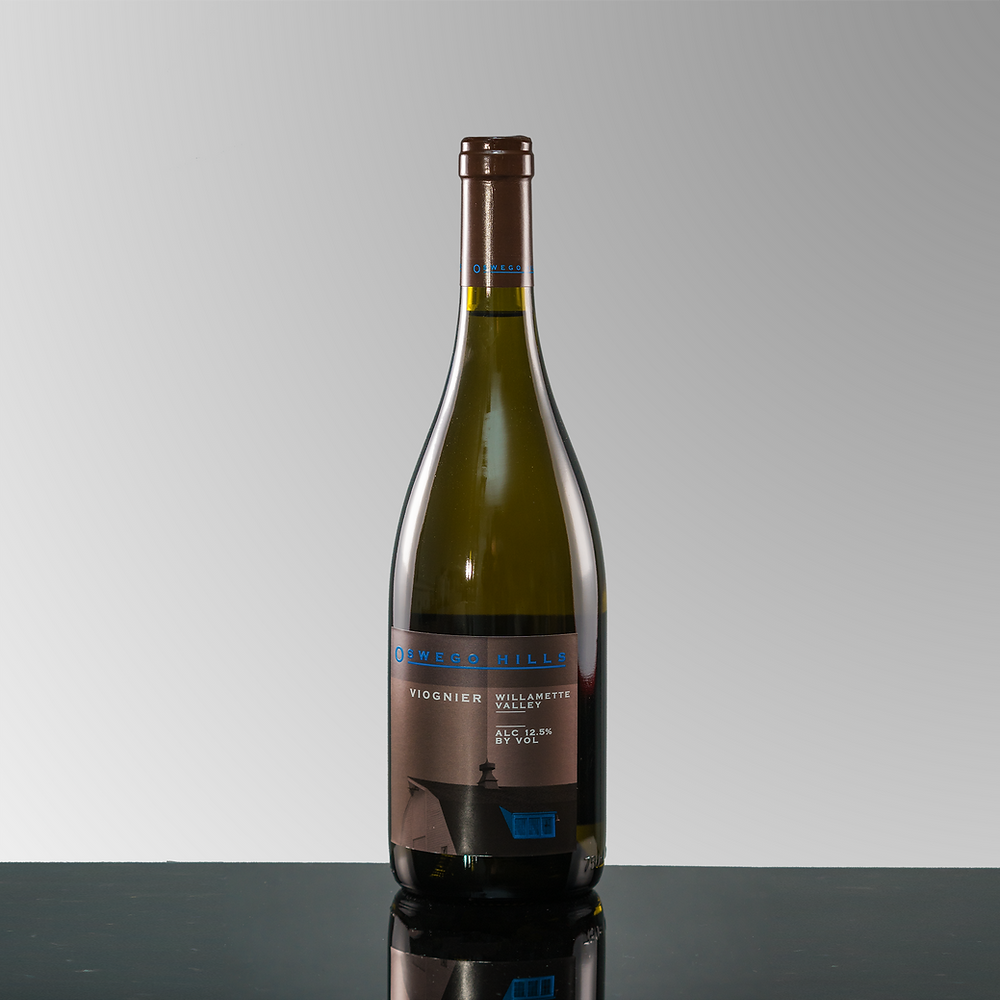
Oswego Hills Viognier
Our Viognier is sourced from the Monson Family at Goose Ridge Vineyard of Columbia Valley Washington. This wine is loaded with aromatics.
It is lively and expressive, bright and fragrant. Peach and apricot flavors add excellent richness and intensity, with lingering concentration and just enough lemon acidity to keep it refreshing on the finish. Seafood, pasta, turkey, veal, ham, heavy cheeses, spicy food and salads work well with this wine.
Viognier really melds well with just about anything or works just fine on its own during a hot summer day.
$25.00 per bottle | $127.00 per 6-pack | $240.00 per case | 101 cases produced
This wine is currently sold out for the website store.
Lovely Liv’s Rosé
With spring and summer leading into longer days, the outdoors become more inviting to stay and linger into a warm, dusky night. There is nothing like the taste of a cold, frosted glass of a dry Rosé wine and simple foods for hotter weather. This is the time of the year when big, tannic red wines, a favorite throughout the late fall, winter and early spring, become too heavy in hot weather and don’t particularly compliment the lighter fare served on patios and decks throughout the late spring and summer.
Rosé is the French word for “pink.” The wine is made from red grapes, but the skins are removed early in the process, resulting in a light pink color. Rosés can be produced from just about any grape, including Zinfandel, Syrah, Merlot, Pinot Noir and Tempranillo. Serious wine drinkers scoff at a “salmon-colored wine” as being too sweet and lacking any character or oomph.
We’ll see if they are banging that same drum as they try to down their big glass of Cabernet with a chilled pasta salad and bruschetta on a 90 degree day. There are three methods for crafting Rosé: Maceration Method: After the grapes are crushed, they’re moved to a large stainless-steel vat, where the juice stays in contact with the grape skins. After the desired color is achieved, the juice is drained off the skins into another vessel to ferment.
Thick-skinned grapes, such as Syrah, Cabernet, or Zinfandel, have shorter skin contact time, while thinner-skinned grapes, such as Grenache or Pinot Noir, are left on the skins longer. The longer the maceration time, the more color, flavor, and character are imparted to the finished wine. Saignée, or “bled” Method: Saignée, pronounced “sonyay”, is a French term meaning “bled” and this relates to the running off, or bleeding, a certain amount of first-run juice from red grapes.
The grapes and skins – usually a blend of dark-skinned, intensely flavored grapes that would make a big, powerful red wine – are crushed and left in a large, stainless-steel vat. After an hour or two, a certain amount of juice is drawn off or “bled,” and fermented into a delicate rosé (the juice that stays behind is made into red wine). Saignée allows a winemaker the option of making a delicate rosé wine from intensely flavored grapes (it also concentrates both the color and the flavor in the juice that remains with the skins).
The resulting rosé will be complex and flavorful, but lighter than the resulting red wine would be. Blending red and white wines together: Blending is the way rosé Champagne is often made, and in France, that’s the only time blending red and white wines is legal. The wines have flavors of strawberry, raspberry, cherry and even plum, with some spice, a light complexity of flavors and a balance of acidity that works very well with food.
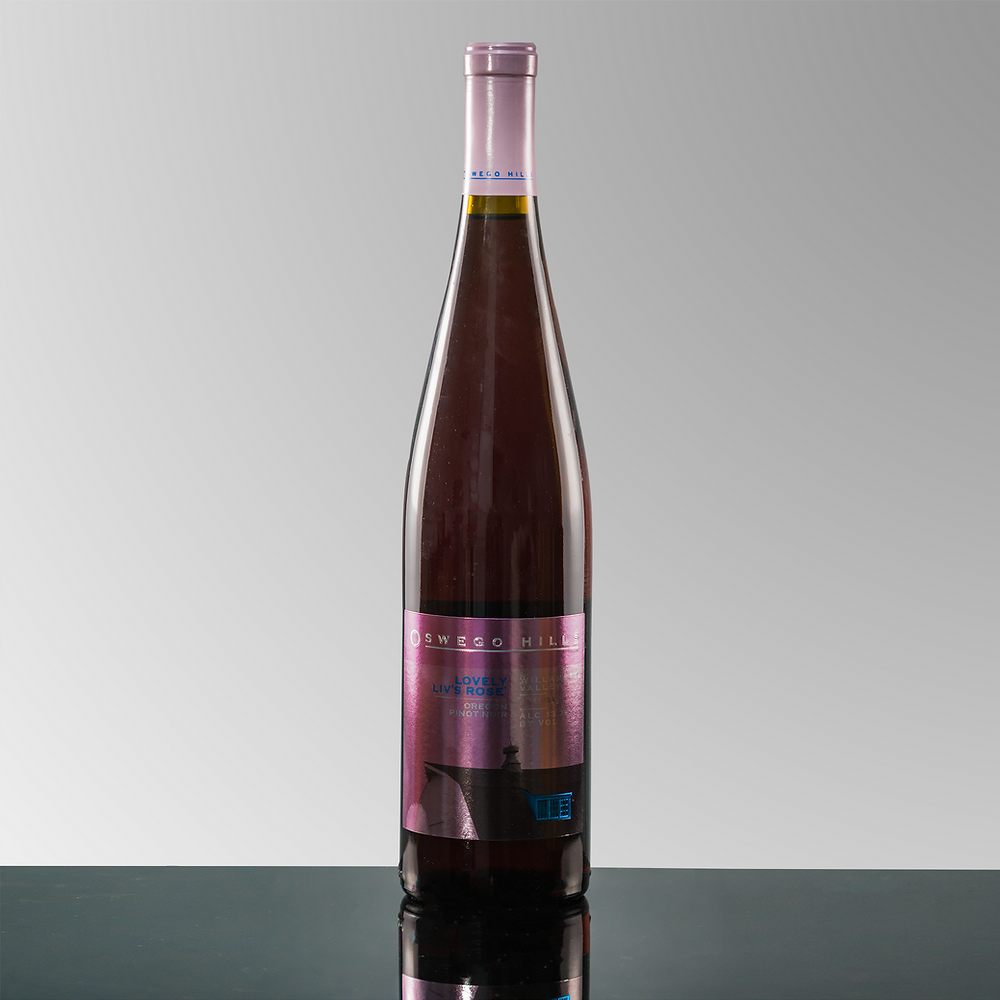
Lovely Liv’s Rosé
Lovely Liv’s Rosé is produced by la method Saignée from our estate grown Pinot Noir. After being upstaged for years by her older sister’s Avery & Celia, it was finally time to relent and name a wine after our youngest daughter Olivia. This Rosé offers fresh fruit flavors of strawberries, cherries, raspberries, with hints of ruby red grapefruit and watermelon.
There is a nice acid balance, delicate fruit flavors and a clean, crisp mouth feel on the finish. Lovely Liv’s is an excellent food wine due to the balance of acidity and fruit and a light to medium body. It is a great companion to shrimp, scallops, crab dishes, cold meats and meat salads, chicken salad, pasta salad, barbecued chicken, grilled halibut, pan-seared fish, paella or salmon in parchment paper.
In the South of France, rosés are famously associated with salads, especially salad nicoise from the Cote d’Azure. This is one of the few times you will find a wine paired very successfully with a salad. Lovely Liv’s Rosé is meant to be consumed early on.
So, get some while you can, because it sells out fast.
$25.00 per bottle | $127.00 per 6-pack | $240.00 per case | 130 cases produced
Pinot Noir
Pinot Noir is one of the oldest grape varieties used in winemaking. It can be traced back to the Ancient Roman Empire of the first century AD when they made wine with this grape known as Helvenacia Minor. Pinot Noir is grown worldwide in countries such as Argentina, Australia, France, Germany, New Zealand, Switzerland, and the U.S. and has several known alias names as well as a genetic instability that makes ampelographers go crazy.
There are an estimated 500-11000 clones or mutations of Pinot Noir. We have four clones in our vineyard: Pommard, 115, 667 and Wadensvil. A grape such as Cabernet Sauvignon has only 12 known clones.
Pinot Noir is an extremely difficult grape to grow dependent upon all the right conditions in relation to temperature, orientation, soil, nutrition, disease, and bird control. Difficulties can plague pinot noir for every step of the fermentation to bottling process. One slight variation or affliction can make the difference in a neutral, muted wine to an aromatic, great pinot noir that makes a lasting impression on its drinker.
The goal with pinot noir is full-bodied and rich, but not too heavy wine, an equal balance of acid to tannin leading to a velvet soft texture, and a wine with substantial fruit flavor that remains delicate and elegant to the palate. Descriptors such as black cherry, liquid silk, spice, smoke, toast, mushroom, and violets are terms describing quality pinot noirs. The reputation that has given pinot noir so much worldwide attention is owed to the wines of Burgundy, France.
This two-mile wide, thirty-mile-long stretch of hills is known as the Cote d’OR or “slope of gold”. The French have coined the term “terroir” and have produced consistent premium pinot noir year after year. Oregon has set lofty goals making every attempt to achieve this success.
We have our own “terroir” and go to great lengths to produce a consistent premium pinot noir year after year. Our industry has gained a worldwide reputation and the bar has been set at a high mark. As a consumer, we are sure you can understand Oregon’s steady romance for this alluring yet fickle grape.
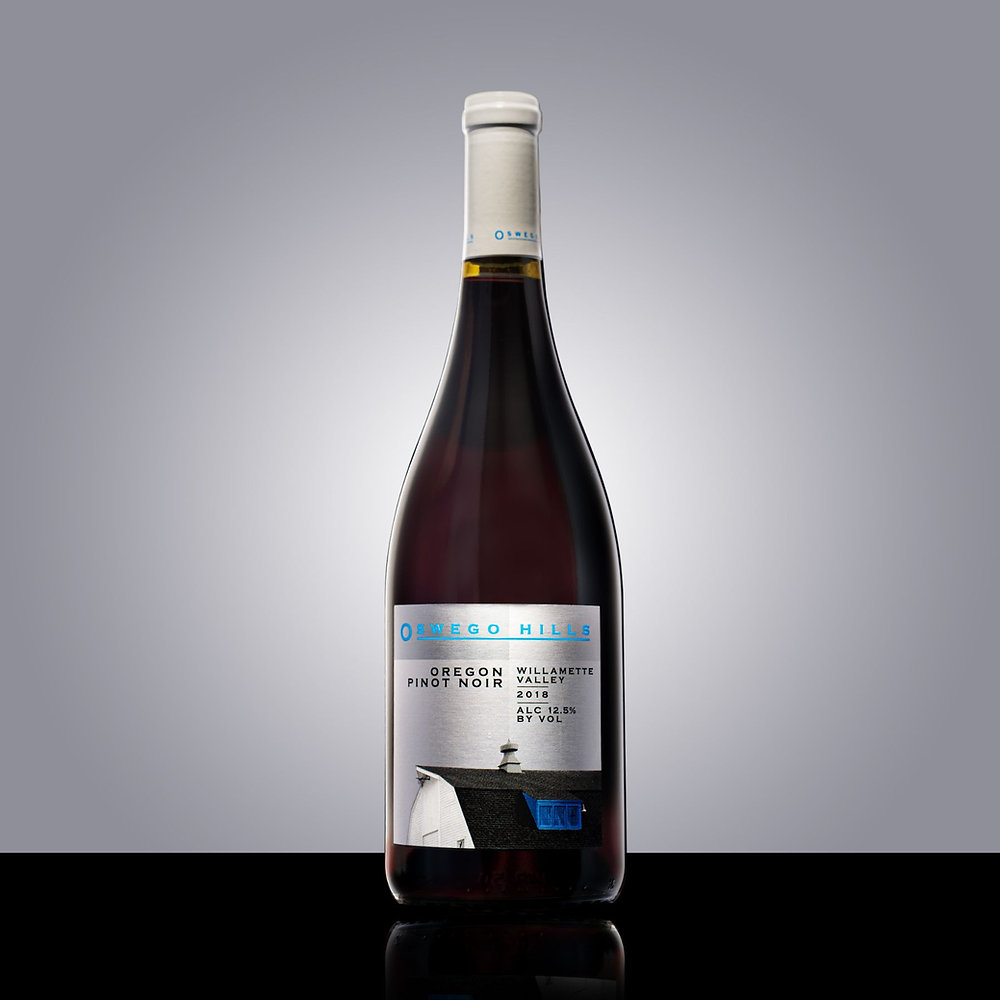
Oswego Hills Pinot Noir
As this vintage came to a close, we were dealing with top quality fruit, but in extremely low yields. We had high hopes along with a calculated optimism that this was a truly special year. After a year of barrel aging in a program consisting of 80% new oak and 20% 1 year old barrels, the finished product lived up to the hype.
This wine has layers upon layers of gorgeous cherry, blackberry, plum and blueberry integrated with a silky texture, a hint of smoke and a long refined finish. Rich, ripe, and distinctive best describe this polished, well-rounded, opulent wine. Our vineyard is now well established since its initial planting in 1997 and the grapes have really started to hit their stride.
The talk with Pinot Noir is structure and layers of aroma, flavor and finish.
Pinot is revered in terms of having more depth and nuance then any other type of wine in the world. If you stay with it, Pinot will reward you. We’ve stuck with it and we are proud to offer this wonderful wine to you.
Pinot is best served with salmon, beef, mushrooms, cheeseburgers, pizza, and about anything else you can think of.
$30 per bottle | $153.00 per 6-pack | $288.00 per case | 165 cases produced
Pinot Noir Vintage Select (Reserve)
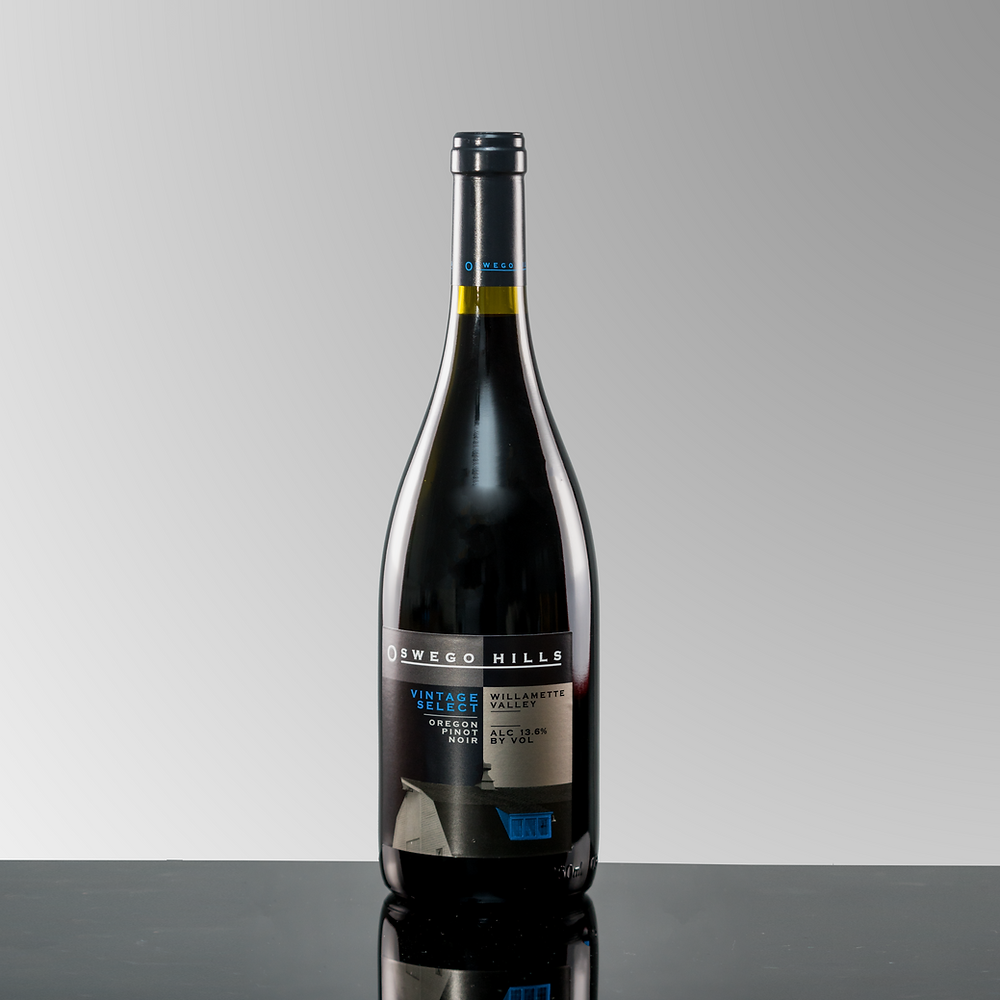
Each year we make between 100-130 barrels of wine. With each Pinot Noir harvest, we hand sort the most premium grape clusters into our “reserve line.” Pinot Noir translates into “Black Pine Cone.” When we sort the grapes, we look for the tightest clusters with the smallest berries. These dark, purple pine cones have grapes the size of huckleberries.
The skin-to seed-to juice ratio is thus thrown out of balance from your typical Pinot Noir cluster. The resulting wine is a much fuller bodied, intense Pinot. The tannin structure is far more apparent given the additional skin and seed to juice contact.
We essentially create a Cabernet styled Pinot Noir for those of you in search of a stand alone wine with complex and layered flavors that hold up with any occasion. Once the determination is made as to which grapes will go into our reserve program, the wine is slowly fermented over 21 days to gain maximum extraction. The wine is then racked into 100% new French oak barrels for secondary fermentation and aging lasting 12-16 months.
Once complete, we taste each barrel and make the ultimate selection of the top 5 barrels for our Vintage Select of that year. The barrel selections focus on overall intensity, deeply concentrated color, opulent fruit and firmly integrated tannins. The finish is balanced with a light acidity, barrel toast, and velvety mouthfeel.
Our typical Vintage Select blend will consist of 60% Clone 667, 25% Pommard and 15% Dijon 115. This is an amazingly pure wine, loaded with fruit and combining the Pinot elegance with grace and persistence that will pay dividends for years to come.
$50.00 per bottle | $255.00 per 6-pack | $480.00 per case | 95 cases produced
Large Format bottles: Magnums are available for $80 at the winery only A limited number of etched, hand-painted 3L, 5L, 9L and 12L bottles are available at the winery.
Cabernet Sauvignon
Cabernet Sauvignon is thought by many to be the premier red wine grape in the world. Cabernet is the dominant grape of Bordeaux France and Napa Valley California. Plantings now range into Chile, Australia, and the Pacific Northwest.
Cabernet Sauvignon is known in some parts of the world by other names including: Petit Cabernet, Sauvignon Rouge, and Vidure. DNA testing reveals that Cabernet Sauvignon is a hybrid offspring of Cabernet Franc and Sauvignon Blanc. Although these names all sound alike, Cabernet Sauvignon is much heartier than its parents.
Many etymologists believe that Cabernet relates to the Biturica grape that the Roman poet Pliny recorded in the year 71 A. D. as being planted in Bordeaux because of its hardiness. The Cabernet Sauvignon grape produces wines that are tannic and can have long aging potential.
Famous Bordeaux’s from the late 1700’s are still holding in the bottle as the most expensive bottle of wine ever sold was a 1787 Chateau Lafite etched with the initials Th. J from the cellar of Thomas Jefferson for $160,000. Cabernet is a small, dark, thick-skinned grape that gives average yields and typically needs warmer growing conditions to achieve maturity.
Distinctive characteristics of Cabernet Sauvignon include a high level of complex phenolics, which provide a rich palate of both flavor and aroma. Dark cherry, cedar, tobacco, black currant, plum, black licorice, olive and bell pepper, have all been used to describe Cabernet Sauvignon. Cabernet Sauvignon began to emerge as America’s most popular red varietal wine in the mid-1960’s.
By the late 1980’s it had replaced “burgundy” as a consumer’s generic term for red wine (as had Chardonnay replacing “Chablis” as the equivalent for generic white wine. This popularity was based partly on the stand-alone flavor appeal of the grape and partly due to its status or highbrow appeal as the ultimate “collector’s” wine. Indeed Cabernet Sauvignon is the wine most subject to inflationary climb with fans, collectors, and the Noveau Riche bidding the supply ever upward.
This high-end, high-dollar wine has become the “King of the Cellar” with momentum that does not appear to be stopping anytime soon.
Oswego Hills Cabernet Sauvignon
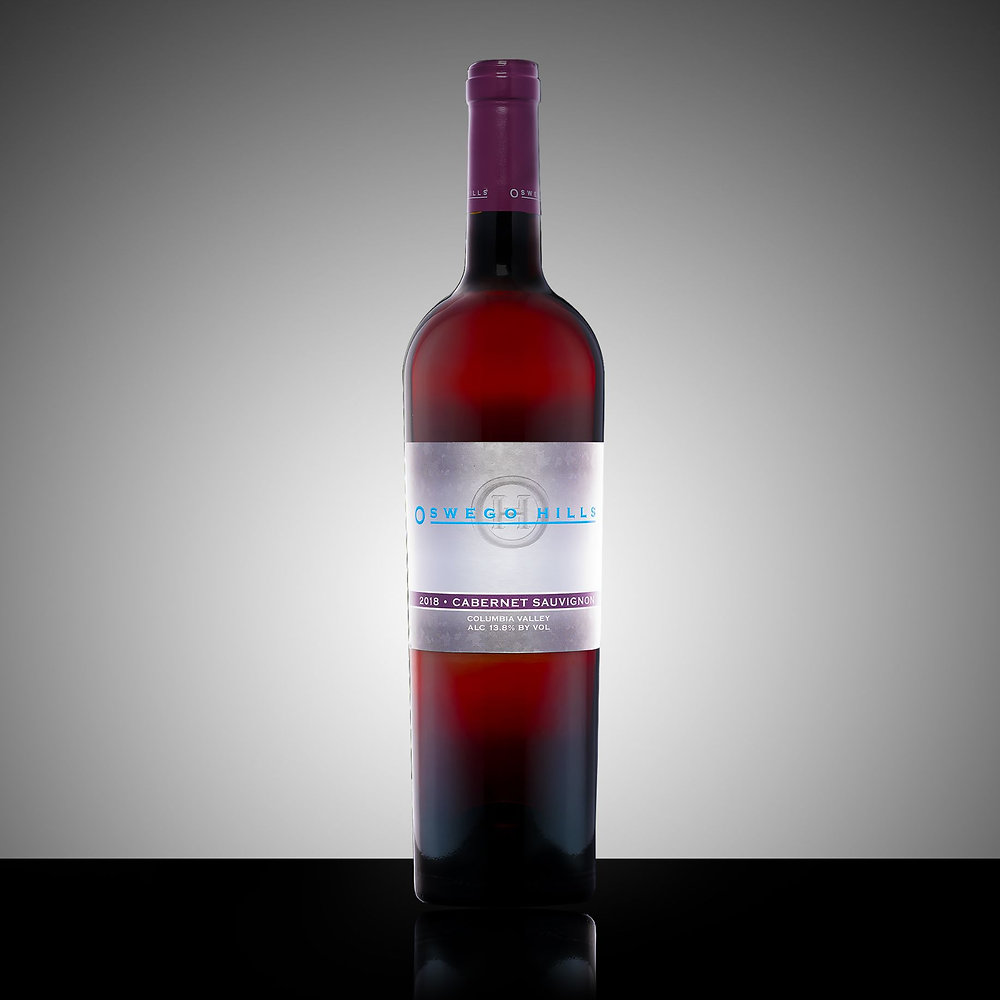
Using grapes sourced from Washington’s finest appellation adjacent to Benton City, our Cabernet has been resting for the past 20 months in barrel awaiting its much-anticipated release. This Cabernet is a bold effort, opulent in style, and layered with flavors of rich extracted blackberry, currant and plum.
The initial processing consisted of a 7-day cold soak followed by an 18 day primary fermentation. Aging consisted of 50 percent new and 50 percent 1-2 year old barrels. Overall, the finished wine is intense and extracted, yet balanced with a firmly integrated tannin structure adding to a complex, long-lasting finish.
Enjoy this stand-alone wine now or let it age gracefully for the next 10-15 years in your cellar. Food pairings with Cabernet include duck, beef, rabbit, spicy poultry, cheddar & blue cheeses, sausage, and rich desserts.
$40.00 per bottle | $204.00 per 6-pack | $384.00 per case | 300 cases produced
Large Format bottles: A limited number of etched, hand-painted 3L, 6L, and 12L are available at the winery
Celia’s Cuvee
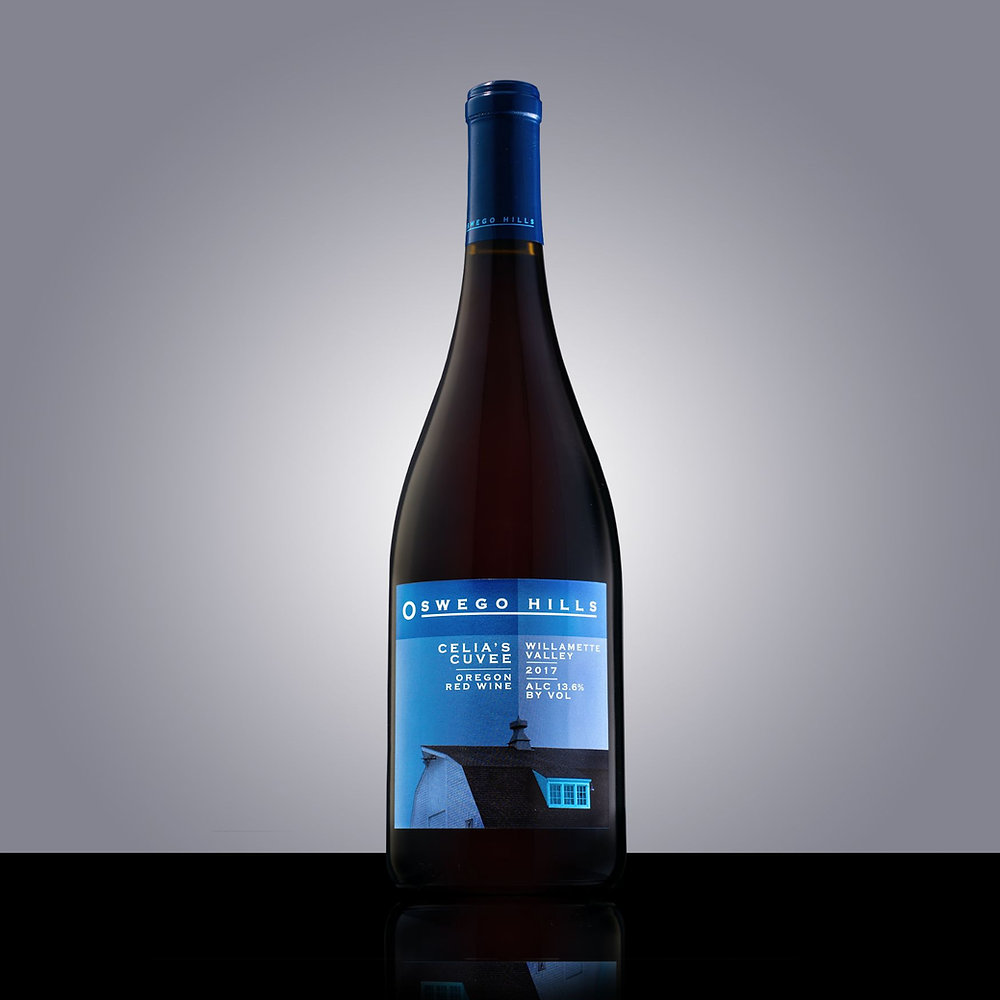
Due to the overwhelming popularity of our white blend and the second child beginning to ask questions, we decided to offer another special creation from the red side. Celia’s Cuvee is an intensely concentrated dark red core of hand selected barrels from our top shelf Pinot Noir, Marechal Foch, Merlot and a mystery grape known only to the winemaker. This wine offers an enormous complexity, elegant style, concentrated aromas, and multiple layers loaded with flavors of wild berry, black cherry, plum & chocolate.
Integrated tannin structure with a Pinot driven backbone of vibrant acidity create the medley of graceful balance with expansive depth and extra flavor nuances on the long, smooth finish. Celia’s Cuvee offers density, opulence and an amazing mouthfeel of fruit without having to wait until 2023 to try it. As with any wine, the key is balance.
Difficulty arises when you’re trying to create a full bodied, rich, chewy wine that is ready to drink right away. Well, don’t worry, we went ahead and took care of that problem with our perfectly blended offering of Celia’s Cuvee. Celia didn’t particularly care for it but she’s not even a teenager yet.
We love it and recommend trying it as a stand alone wine or pairing it with a big fat steak, lasagna, wild game, smoked meats & cheeses and even chocolate cake.
$30.00 per bottle | $153.00 per 6-pack | $288.00 per case | 115 cases produced
Marechal Foch
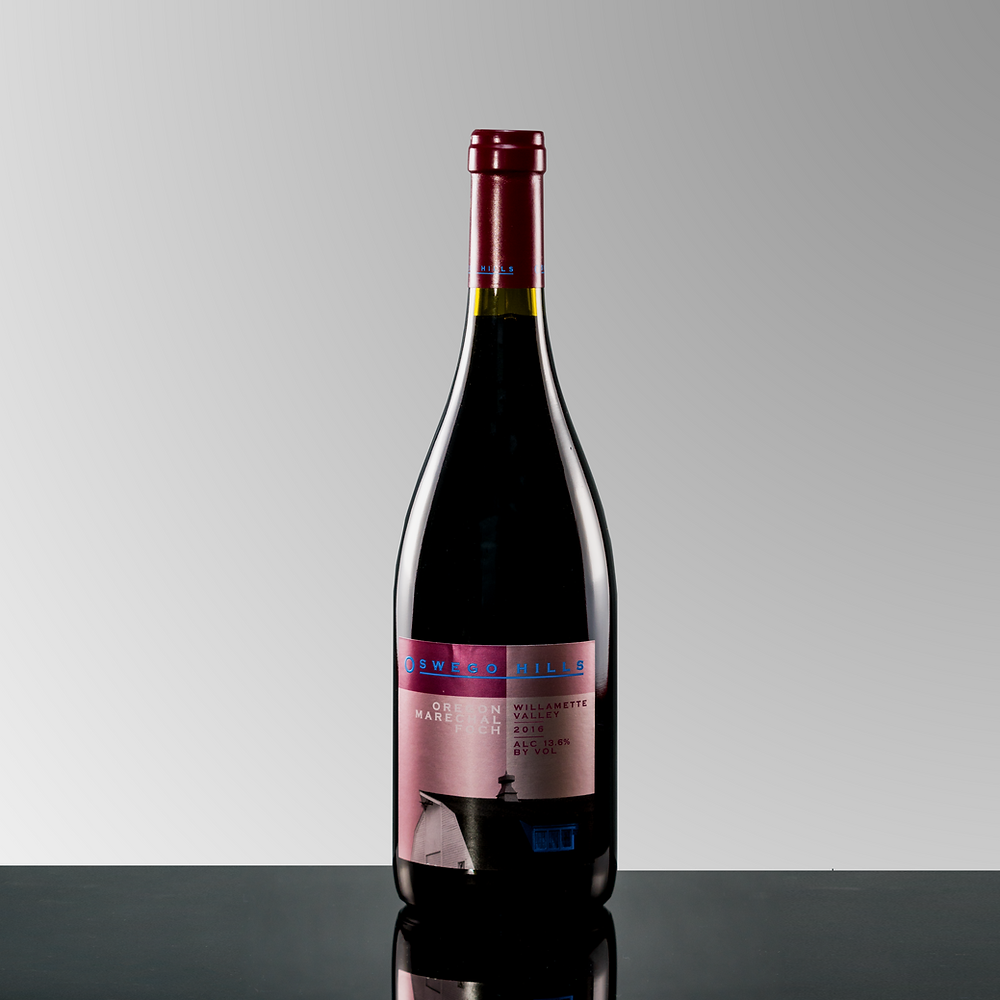
This is a wine grape gaining a huge, almost cult following. It is named after the World War I French General, Field Marshall Ferdinand Foch, and was developed in Alsace, France by a grape hybridizer Eugene Kuhlmann. The red grape is officially known as Kuhlmann 1882.
It’s a cross of Goldriesling and an American Vitis Riparia-Vitis Rupestris vine. Two interesting things of note are that Marechal Foch is resistant to Phylloxera and it is classified as a Teinturier, meaning that this dark skinned grape has red rather than the white pulp found in most grapes. As a result, Marechal Foch has an intense deep ruby to purple color.
Legend has it that Marechal Foch was aptly named due to the amount of blood spilled on “Field Marshall” Foch’s account by having allied soldiers charge into battle. Our wine is richly colored, offering an earthy nose similar to Merlot with a good balance between acid and tannin. Marechal Foch is not an overpowering heavy red wine.
It is quite jammy, fruit forward and very drinkable with a smooth, slightly spicy finish. Flavors such as cranberry, cherry, raspberries, and even chocolate come out. This wine is a nice alternative if you are looking for something unusual and different to try.
In the summertime it even works well as a chilled red. It also looks most impressive when swirling your glass at a little soiree.
$30.00 per bottle | $153.00 per 6-pack | $288.00 per case | 120 cases produced
Merlot
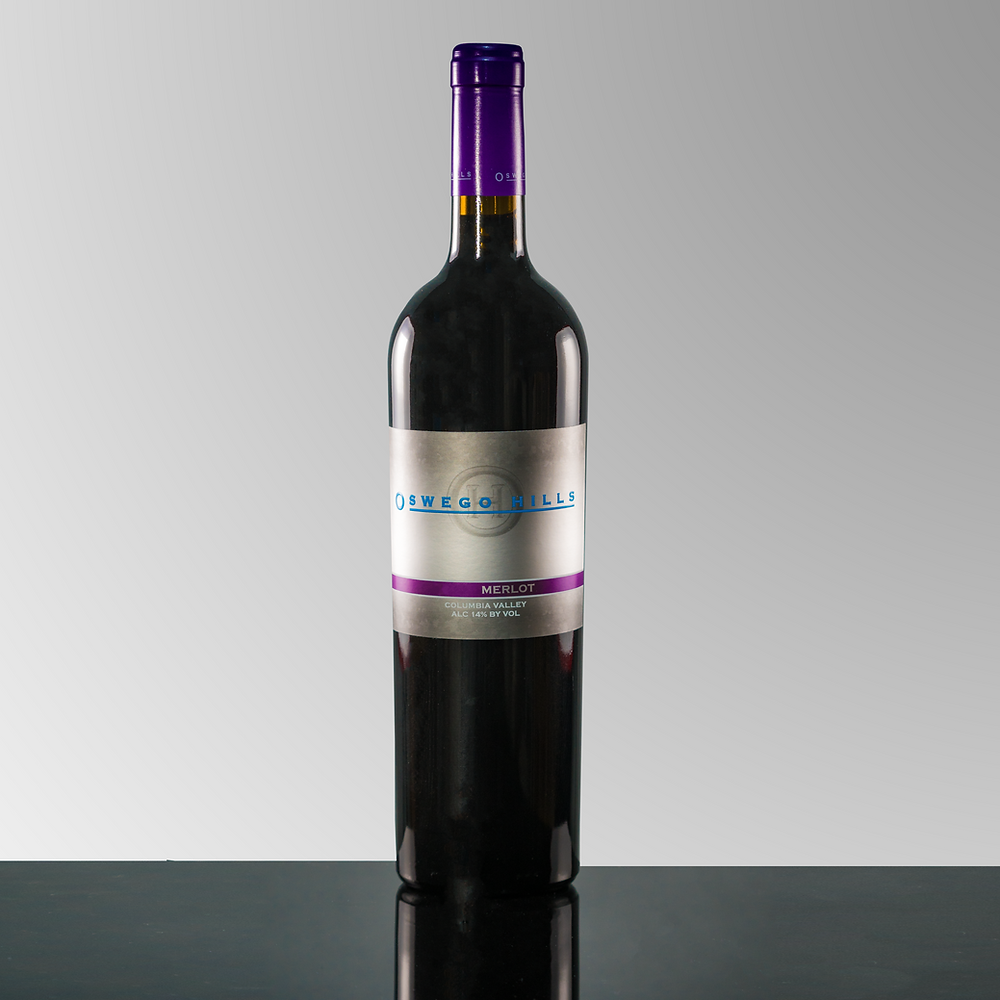
Merlot is the American “burgundy” of the 2000’s. This grape dates back to Bordeaux in 1784 when top wines were produced in the Libournais region. The name comes from the French regional patois word “merlot” which means “young blackbird.” The naming could come from either the beautiful dark-blue grape color or the blackbird’s fondness for the grape.
UC Davis researchers believe that Merlot is an offspring of Cabernet Franc and a sibling to Carmenere. Merlot is widely planted throughout the world in places like Bordeaux, Croatia, Hungary, Italy, Switzerland, Australia, New Zealand, South America, South Africa, and throughout the United States. To this day, the most sought after wine in the world is Chateau Petrus, which prices out at $5000 for a single 750ml bottle. (That is $80 for a sip!) Merlot is often thought of as “vineyard insurance” due to its higher yields and early ripening.
The cluster is a loose bunch of large berries with a blue/black hue and thinner skins. When compared to Cabernet Sauvignon, Merlot has fewer types of tannin, higher sugars and lower acids, which translates into a fruit forward taste profile and lush mouth feel. If left on the vine too long or harvested too early, Merlot can be quite herbaceous though.
Merlot has a flavor profile similar to Cabernet Sauvignon, and an often time is blended with Cabernet to extract more fruit flavors out of the wine. Typical flavor and smell characteristics of Merlot include black cherry, currant, plum, sweet & smoky wood, violets, coffee, leather, mushroom and earth. Although Merlot matures earlier in the bottle than Cabernet Sauvignon, it is held in higher esteem to wine drinkers rather than wine collectors.
Merlot is easy to say, easy to drink, and readily available at all price ranges. It spite of the beating Merlot took in the movie Sideways, it is still by far the most popular red wine consumed in North America. With a loyal following and growing popularity, we felt compelled to break into the Merlot market.
Oswego Hills Merlot
Our Merlot is sourced from the top-growing region of the Columbia Valley in Washington. Following a 21-day primary fermentation, the wine is aged in new French and Hungarian oak barrels for 16 months prior to blending and bottling. Jammy blackberries, sweet cherry, concentrated plum, and an overall smooth structure with a supple, lingering finish characterize this balanced wine.
Enjoy this wine now of let it age for the next 5-7 years in your cellar. Pairings with the medium-bodied Merlot include veal, lamb, beef, salmon, tuna, mushrooms, berries, pasta, pizza and any non-squishy cheese.
$30.00 per bottle | $153.00 per 6-pack | $288.00 per case | 240 cases produced
Petite Sirah
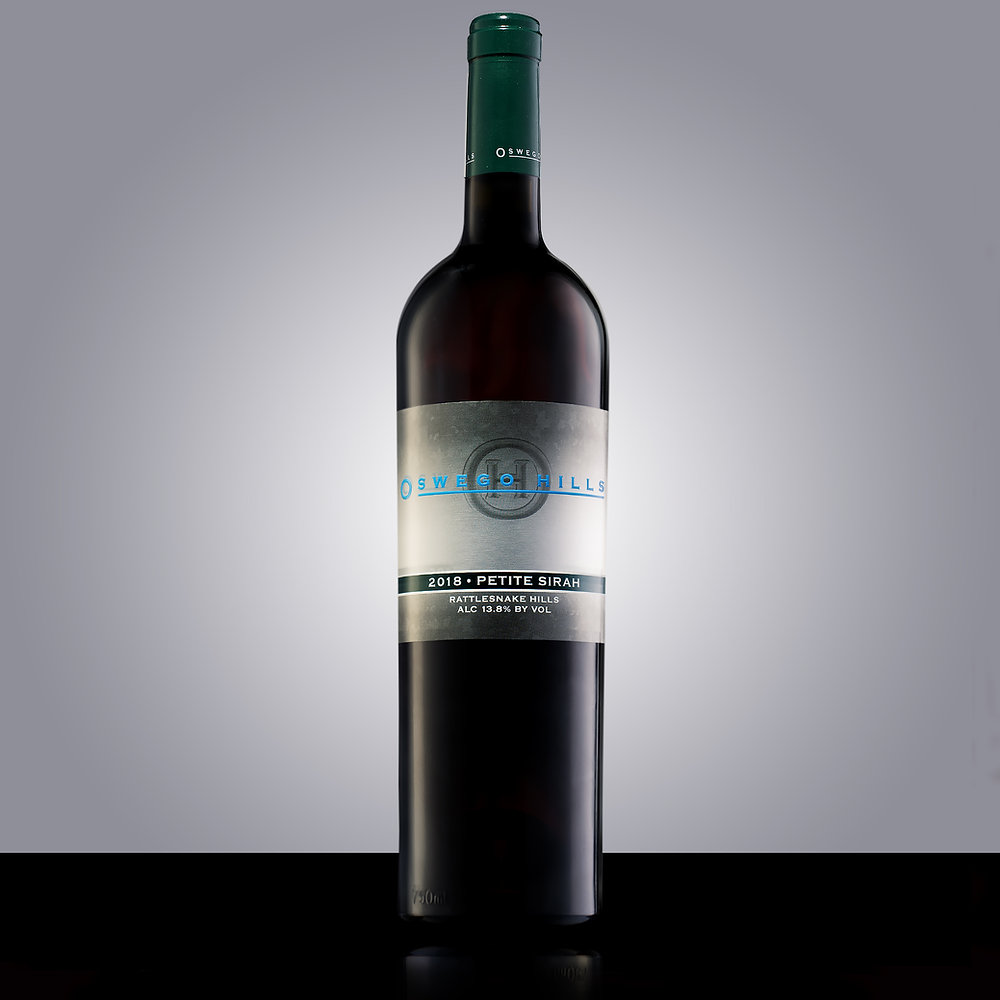
Dr. Francois Durif, a grape nurseryman working in France’s Southern Rhone region, developed Petite Sirah in the 1870’s. Petite Sirah or Durif is a cross between the noble grape Syrah and the relatively unknown grape Peloursin.
The resulting grape was unique for its resistance to powdery mildew, dense fruit clusters, and a deeply, saturated color. Although Petite Sirah is resistant to powdery mildew, the tight clusters easily succumbed to gray rot in the humid, Rhone climate. By 1884, Petite Sirah had made its way to California and to Victoria, Australia.
The grape has done much better abroad than in its Rhone home, where it is virtually extinct today. Now people get easily confused about Syrah and Petite Sirah. Syrah was introduced to California in 1878.
Growers made the simple differentiation of the low yielding type of Syrah as “Petite Sirah.” Well, these were actually two completely different types of grapes. During the 1890’s, phylloxera destroyed virtually all of the true Californian Syrah vines. Petite Sirah was not affected, and by 1900, it became a popular variety in California.
Syrah and Petite Sirah would now be planted in different vineyard blocks. By 1976, Petite Sirah plantings topped out at 14,000 acres. There are now small plantings in Oregon and Washington as well.
Petite Sirah has small berries, and thus a high skin-to-juice ratio. The finished wines show high tannin levels, high acidity, and the ability to be aged for a long time. Petite Sirah has dense, blackberry or crushed fruit character and a dry, spicy or black pepper finish.
Check out the P.S I Love You website to learn more about this misunderstood grape. Remember, Petite Sirah is spelled with an “I”. So, when you’re thinkin of what to be pairin with this rich, age worthy red, think about firin and grillin a big slab o’beef.
Oswego Hills Petite Sirah
Petite Sirah is hard to find, especially in the Pacific Northwest. We were lucky to source a beautiful block of Petite Sirah in the Rattlesnake Hills of Zillah, Washington. Our fruit had amazing ripeness and intense flavors.
During fermentation, we actually press the grapes a bit earlier than normal to help minimize the tannin extraction and promote the lush blackberry and marionberry flavors. There is still a nice balance of firm tannins with a rich, zesty finish. This wine will have a long cellar life and will pair well with all meats, pasta and stews.
If you’re looking for something different to try, Petite Sirah may be the answer. Petite Sirah really has quite a following and we have also discovered that it makes a wonderful Port-style wine.
$35.00 per bottle | $178.00 per 6-pack | $336.00 per case | 100 cases produced
Syrah
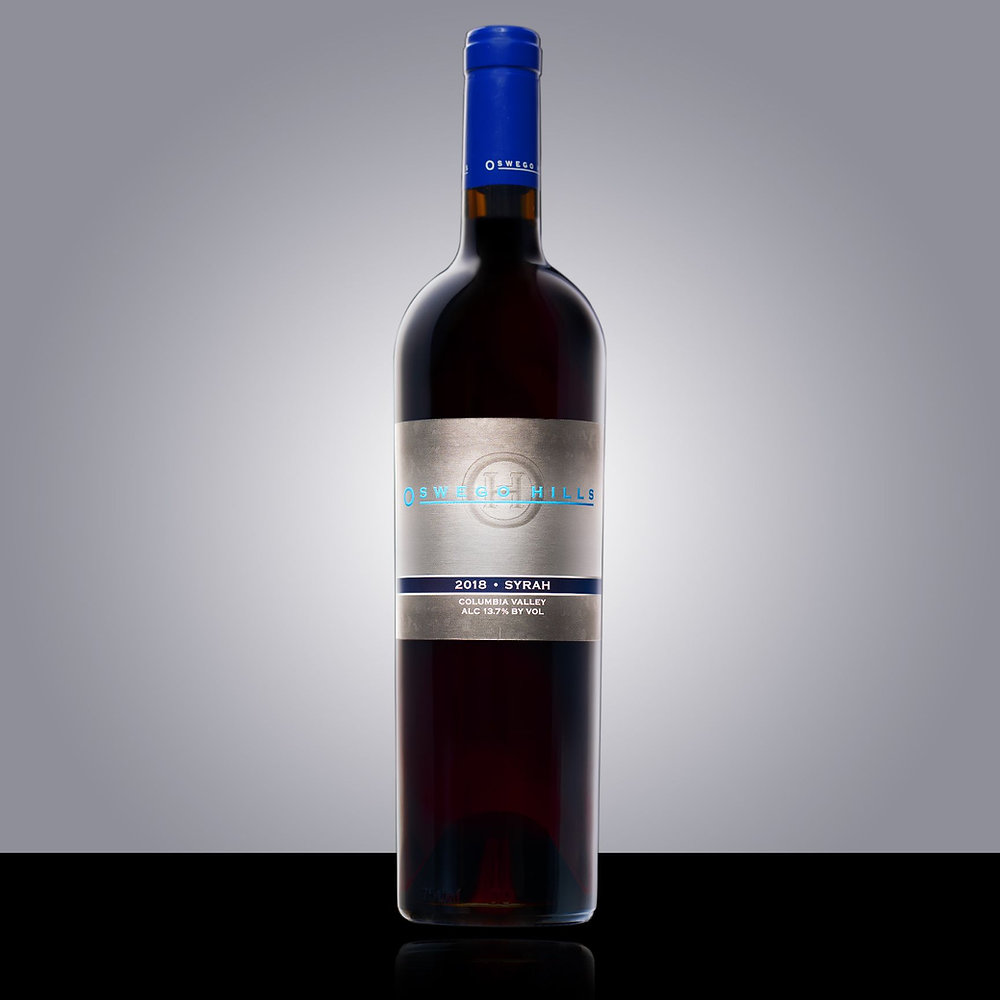
Syrah is the only grape used to make the famous Rhone wines of Cote Rotie and Hermitage, but also forms the backbone of the Rhone blends from Chateauneuf du Pape. This grape is called “Syrah” in France and the United States and “Shiraz” in Australia, South Africa, and Canada. There was a great debate as to whether the origin of Syrah came from Persia (Iran) near the city of Shiraz (meaning: city of flowers) or from France.
It was thought that Syrah had been transplanted from Persia to France in the 13th Century; however, DNA profiling at UC Davis and Montpellier France proved Syrah was indigenous to France. The parent grapes of Syrah are the obscure varietals Mondeuse Blanc and Dureza. Although cultivated since antiquity, Syrah has been recently planted in the United States.
California’s “Rhone Rangers” planted Syrah in the 1970’s, Washington State was planted in 1985, and Oregon in the 1990’s. Australia has had Shiraz since 1832; however, there have constantly been ups & downs with their market share. Recently, they have seen a big spike of plantings in the 1970’s & 1980’s and have not looked back since.
Syrah is often times confused with Petite Sirah or Durif. Petite Sirah is a cross between Peloursin & Syrah. It was created by Dr. Francois Durif with similarities to Syrah except that it has more body & tannins due to it being a smaller, thicker-skinned grape. The Syrah/Shiraz explosion has been led by Australia over the past two decades. This explosion Down Under has also led to a difference in the New World Shiraz -vs- the Old World Syrah of Rhone.
Shiraz produced in Australia is generally leaner than those produced in France, with softer tannins and more leather and blackberry flavors. The question a consumer is faced with is whether you like your Syrah to be bright, jammy, and young or big, tannic, and oaky. Winemakers produce both styles and this can cause some confusion with consumers who associate certain flavors and characteristics with their wine.
Syrah can be loaded with intense color, a chewy, rich texture, and fruit like blackberry and currants or it can have a real spicy/herbal characteristic of pepper, thyme, cedar, clove and licorice. Syrah is also often high in alcohol due to elevated sugar levels and hot weather viticulture. The bouquet can range from earthy, musk, smoke, and leather to vanilla, coconut, and sweet wood.
With such a wide variety of descriptors and an overall drinking friendliness, Syrah has gained a mass appeal and popularity rivaling that of Merlot on the world wine market.
Oswego Hills Syrah
Our fruit comes from a highly sought after vineyard adjacent to the Red Hills of Washington State. This Syrah is a rich, massive, densely flavored wine, packed with syrupy currant, wild berry and boysenberry fruit.
A combination of new French and Oregon oak barrels with 20 months of aging add notes of vanilla, cedar and leather. Crushed berry and violet aromas with round; velvety tannins add more depth with an elegant finish to this full-bodied wine. You can drink this wine now or allow it to mature for the next 5-7 years.
Syrah is a great stand-alone wine or can be paired with braised chicken, chili, goose, stews, peppercorn meats, barbeque, and the infamous ratatouille.
$30.00 per bottle | $153.00 per 6-pack | $288.00 per case | 100 cases produced
Tempranillo
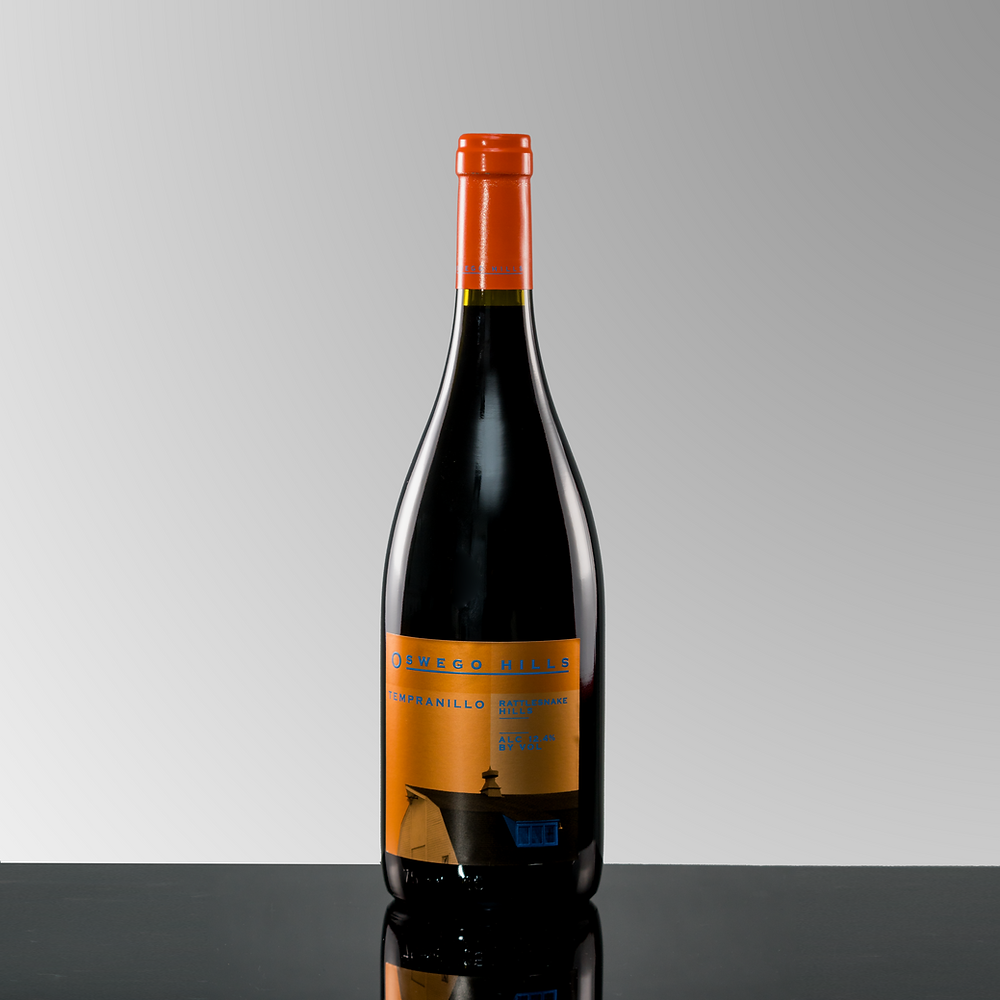
Tempranillo, arguably the most famous of Spain’s native grapes, is a vibrant, aromatic varietal that offers spicy, red fruit aromas and flavors. A thick skin leads to an intense, deep garnet color. The grape’s name translates to “little early one,” a moniker that references fruit’s early ripening tendency– Tempranillo thrives even with a short growing season much the same as Merlot does in the Bordeaux and California vineyards.
The varietal is at its best in top Riojas , where oak aging is employed to generate increased complexity and harmony. From the best sites, these wines can be remarkably concentrated with great aging potential. New wines from this region are darker, and more robust, with more dynamic primary fruit flavors than traditionally styled examples.
These wines seem to reflect the influence of Spain’s other key region for Tempranillo, Ribera del Duero . Regardless of style, Riojas tend to be medium bodied wines, with more acid than tannins. These wines generally feature Tempranillo blended with Garancha, Mazuelo, and Graciano.
For these wines, there are three quality levels, which will appear on the label. Everyday drinking wines fall under the category of “Crianza”, “Reserva” denotes more complex and concentrated wines, and “Gran Reserva” refers to the most intense wines, made only in the best years. In Portugal , Tempranillo is called Tinta Roriz, where it is used to produce wines that are fragrant and complex, with good color, body, backbone, and resistance to oxidation despite possessing only moderate acidity.
The second most widely planted variety in the Douro region of Portugal, it is increasingly popular as a stand-alone variety for dry red wines. Tinta Roriz is called Aragonez in Alentejo, where it is softer and more liqueur-like. It is one of the main grapes used in making the traditional Portuguese dessert wines or Vintage Ports.
Pair the older, traditional style Rioja with simple meats like chicken, hamburger, leg of lamb, and pork loin. The newer style of Rioja and Ribera del Duero works especially well with bolder meat dishes, chorizo salami, olives or an aged Spanish cheese like Manchego or Idiazabal.
Oswego Hills Tempranillo
We source our Tempranillo from the Rattlesnake Hills appellation of Zillah, Washington.
This thick skinned grape produces a gorgeous, deep-garnet colored wine. Aromas of strawberry, plum, vanilla and tobacco entice you to try this bold, full-bodied wine. Flavors of crushed berries, currant, plum and coffee fill your mouth with a perfect balance of light acidity and heavier, but refined tannins on the finish.
$32.00 per bottle | $163.00 per 6-pack | $307.00 per case | 216 cases produced
Zinfandel
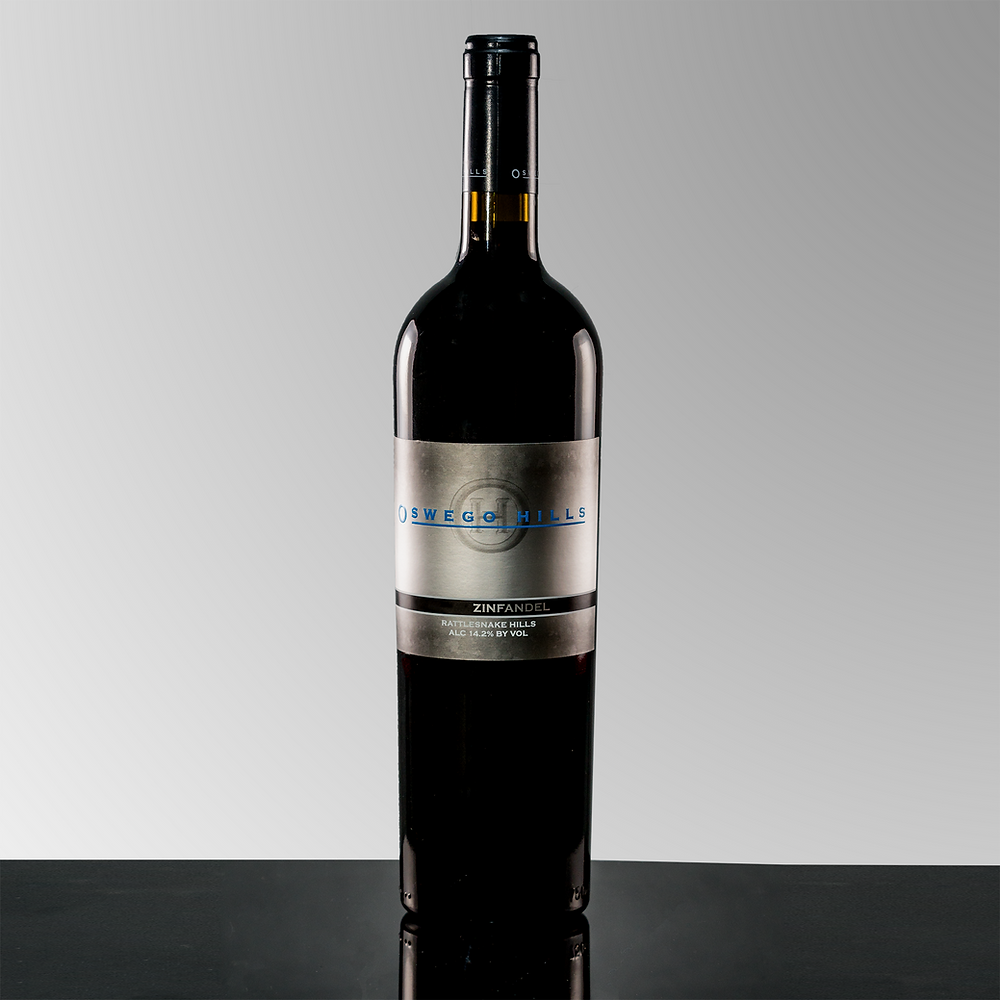
Zinfandel is a varietal that has been a mystery grape for many years given the confusion surrounding its history and lineage. Originally, Zinfandel was thought to have originated in Southern Italy with genetic similarity to Primitivo (di Goia). Recent research in Croatia and at UC Davis, using DNA profiling, has proven that Zinfandel is actually a clone of the Croatian variety Crljenak Kastelanski (also Pribidrag or Tribidrag).
Even further research has shown that the original cuttings may have migrated from Albania or Greece. While Primitivo and Zinfandel share genetic similarities, they are classified as different varietals given their vine and wine characteristics. The name Zinfandel came to the United States in 1820, when New York nurseryman George Gibbs carried back various cuttings from the Imperial Austrian plant collection.
For the next twenty years, Zinfandel became a popular table grape in the Northeast United States. Eventually, a Massachusetts nurseryman introduced Zinfandel to California. Since the 1850’s, Zinfandel and Chardonnay have become indigenous plants to California.
Massive plantings throughout California allowed Zinfandel to be produced in several different styles. Everything from light, fruity, Beaujolais style, to lively, complex, age-worthy, Cabernet style “Zin” can take on many forms. Zinfandel can be made into big, ripe, fruit bomb, Ports or even the famed high-alcohol, California “jug wines” such as Boone’s farm, Almaden, Ingelnook, and Ernest & Julio Gallo.
Some people still even think that there is such a thing as “White Zinfandel.” Zinfandel is proliferative due to its hardy nature. It adapts well to various climates and soils. Several vineyards are upwards of 75-100 years old.
These “old vines” produce smaller, more concentrated berries and clusters that ripen evenly on the vine. At its best, Zinfandel has a fruity, raspberry –like aroma and flavor, and a “jammy” quality. Zinfandel wines are meant to be consumed early (within 3-5 years).
As time passes, the luscious fruit characteristics can give way to the hotter, alcohol taste, creating an imbalance. Zin’s are meant to be paired with steaks or chops or any meat that has been stewed or stuffed with fruit. Zinfandel has become the trendy, second fiddle to Cabernet.
Plantings have now spread out to Oregon, Washington, South America, Australia, Mexico, and South Africa.
Oswego Hills Zinfandel
We were fortunate enough to source our Zinfandel from our friends at Portteus Vineyards in the famed Rattlesnake Hills of Zillah, Washington. Our Zinfandel is bold and zesty with red-berry fruits and integrated with soft, spicy tannins.
Blackberry and raspberry overwhelm the front palette while the jammy fruit lingers with the long, smooth finish. Primary fermentation lasts 21 days to gain maximum extraction and the wine is then aged for 16 months in a combination of 1-3 year old French oak barrels. Zinfandel is a wonderful stand alone wine or pairs nicely with any red meat, strong cheeses, tomato based pastas, and even left-over pizza.
$30.00 per bottle | $153.00 per 6-pack | $288.00 per case | 100 cases produced
Sparkling Wines
Sparkling wine production happened through accident by a Benedictine monk, Dom Perignon of Champagne, France in 1668. The northeast French vineyards were planted with Pinot Noir by the Romans in the 5th century. The Champenoise had challenges with cooler climates, higher acids, lower sugars, and pale, pinkish wines in comparison to their Burgundian neighbors in the South who were making robust Pinot Noir’s.
After harvest and initial production of still wines, the cold winter would set in and halt the fermentation process. Once temperatures increased in the Spring, dormant yeast cells would come back and resume the fermentation process. Carbon dioxide gas is a byproduct of fermentation.
Dom Perignon had bottled wines that pressurized as the carbon dioxide levels increased. Bottles either exploded or produced bubbles when the wine was opened. While the French saw this as a major problem, the British aristocracy developed a liking for the bubbly wine.
Now that a consumer had been found for the bubbly wine, the French needed to figure out a way to keep the bottles pressurized without exploding. By the 19th Century the modern Champagne industry had the process figured out as houses like Dom Perignon, Krug, Pommery, Bollinger and Veuve Clicquot took off. Champagne sales have quadrupled since 1950 as “bubbles” have become a worldwide favorite.
The French have designated the Appellation d’origine controlee (AOC) as Champagne to solidify their production zone of this luxury product. The only producers in the world who get to call it Champagne, are those who make it in the Champagne AOC of northeast France. The rest of the producers around the world get to call it “Sparkling Wine”.
Other sparkling wines from France include: Cremant De Loire, Burgundy, Jura, Alsace, and Blanquette De Limoux. Italian sparkling wines include: Proseco, Franciacorta, Moscato D’Asti, Brachetto D’Acqui, and Lambrusco. From Spain, we have Cava.
From Germany, we have Sekt. And finally, we have American Sparkling Wine. The level of residual sugar in the finished wine is how the sweetness level is classified.
Brut is the driest at 0-3 g/l residual sugar. Extra Bruto is 3-6 g/l, Bruto is 6-12 g/l, Extra Dry is 12-17 g/l, Dry is 17-32 g/l, Demi Sec is 32-50 g/l and Douxover greater than 50 g/l residual sugar. There are 6 ways to make sparkling wine today.
The Champagne Method or Traditional Method is still the best process utilized to produce the highest quality, longest-lived and most complex sparkling wines. This process also requires more labor, time and expense for the producer. The traditional method requires a secondary fermentation to take place inside the bottle in which the wine will be sold, which is temporarily capped after the liqueur de tirage is added to the base wine.
When the yeasts have finished working, they die and become lees. The lees remain in contact with the sparkling wine until removed by the winemaker, creating texture, richness, and complexity in a wine. Before corking the final bottling, winemakers will remove the lees sediment by a process called riddling.
They invert the bottle until the sediment sits in its upside-down neck and can be frozen. When the temporary cap is removed, the bottle’s pressure forces the frozen sediment plug out, at which point a mixture of sugar and wine called dosage is added, along with a final cork and cage wrap. Cheaper and easier methods outside of Method Champenoise include the Charmat Method or Tank Method for production.
The sparkling wine is bottled from a pressurized tank that is already undergoing the secondary fermentation. There are no lees contact in the bottle, so the wines are fruitier, lighter, aromatic and easy to drink. The most popular Charmat sparkling wine is Proseco.
Another production technique called the Transfer Method is a hybrid of traditional and tank methods. Traditional method bottles are transferred into a pressurized tank to separate off the lees and then rebottled into a clean bottle. There is no riddling, disgorgement or dosage taking place.
The Continuous Method is like the tank method, but the liquer de tirage (yeast mixture) is continuously added to the wine as it is pumped through multiple pressurized tanks containing oak. The lees attach to the oak as the finished sparkling wine comes out clean. The oldest method of sparkling production is called the Ancestral Method.
Here, the wine is bottled once the primary fermentation starts. There is no secondary fermentation with this process. Some producers disgorge the yeast while others leave it for a hazy appearance.
The final method is to add Carbonation to the wine. It’s like mixing carbon dioxide with soda. These sparkling wines tend to lose their bubbles quickly.
Oswego Hills Sparkling Pinot Rosé
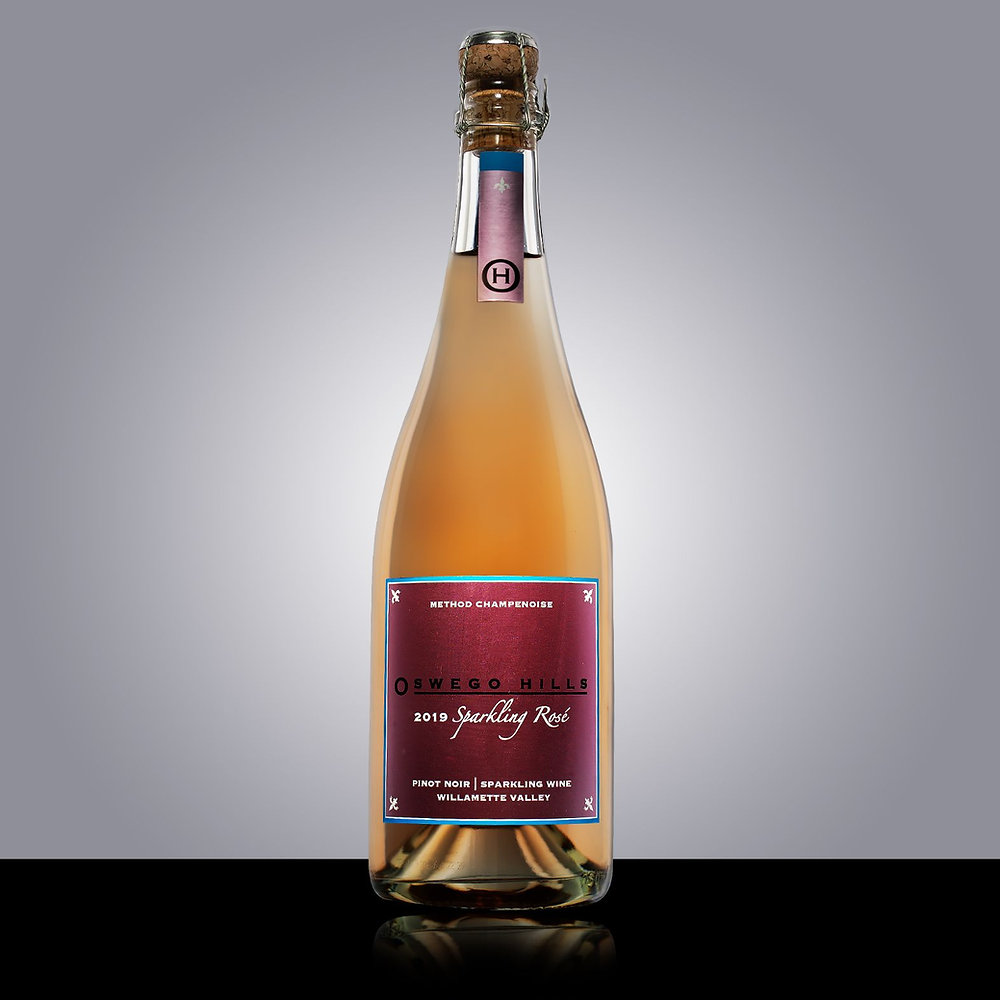
Oswego Hills Sparkling Pinot Rosé is produced by the Traditional Method Champenoise. A select block of Pinot Noir grapes are harvested around 19 degrees brix for optimal acid levels. The liquer de tirage is added as the wine is placed into its fermentation bottle.
Once the primary fermentation is complete and carbon dioxide levels are acceptable, the yeast lees plug is disgorged prior to our final dosage and cork & cage closure. Wonderful aromatics and flavors or strawberry, pomegranate and ruby-red grapefruit really come through with this Brut finished sparkling wine. Food pairings include just about everything from cheeses and buttered popcorn, to seafood, salami, fruit and vegetables, or if you prefer, bubbles are perfect as a stand-alone wine.
$40.00 per bottle | $204.00 per 6-pack | $384.00 per case | 100 cases produced
Oswego Hills Blanc Le Ange’
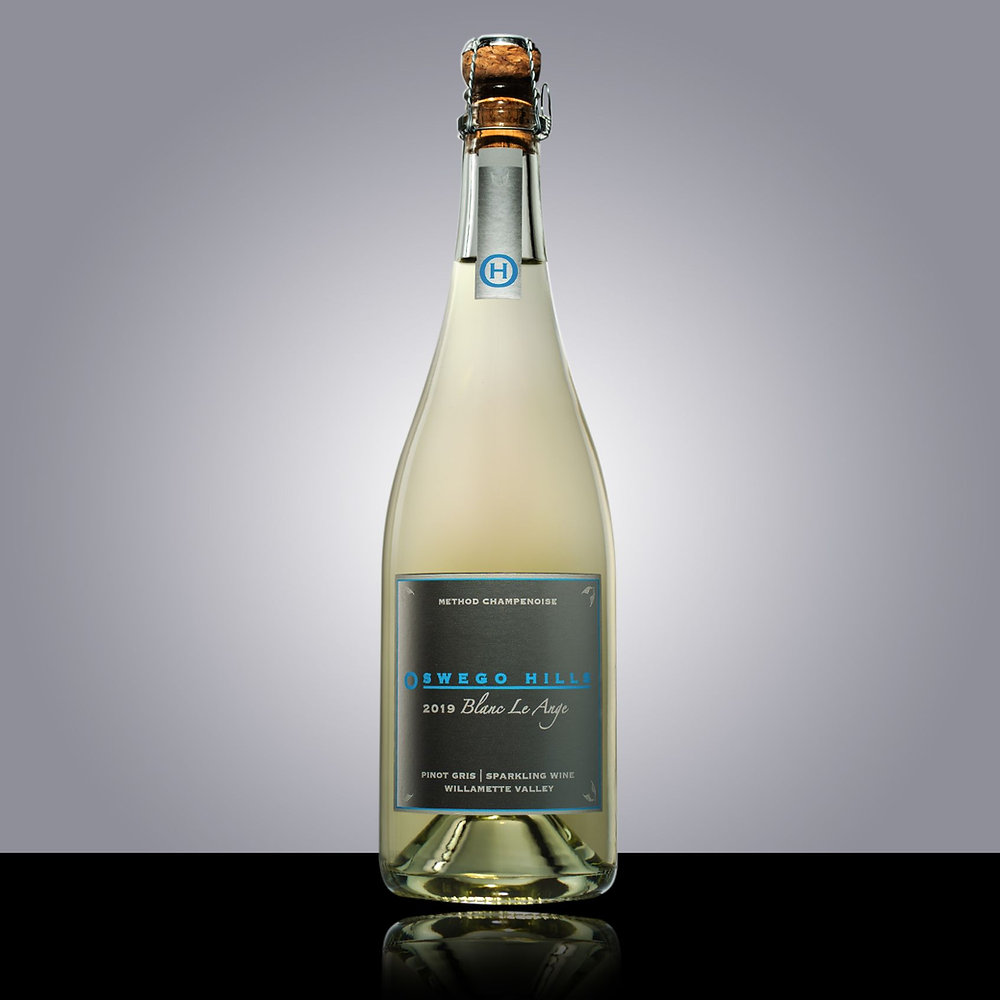
Oswego Hills Blanc Le Ange’ is a Brut style sparkling wine produced by the Traditional Method Champenoise using select Pinot Gris grapes from our rock pile section of our vineyard.
A crisp acidity and minerality grab you while flavors of honey crisp apple, pear, melon and underlying tropical fruit make the “White Angel” a clean and refreshing sparkling wine to enjoy with family and friends. Food pairings include fresh fruit, mild cheeses, bread that doesn’t hurt when you chew it, and pretty much anything you can dip into hummus.
$40.00 per bottle | $204.00 per 6-pack | $384.00 per case | 100 cases produced
Oswego Hills Le Fantome’ Noir
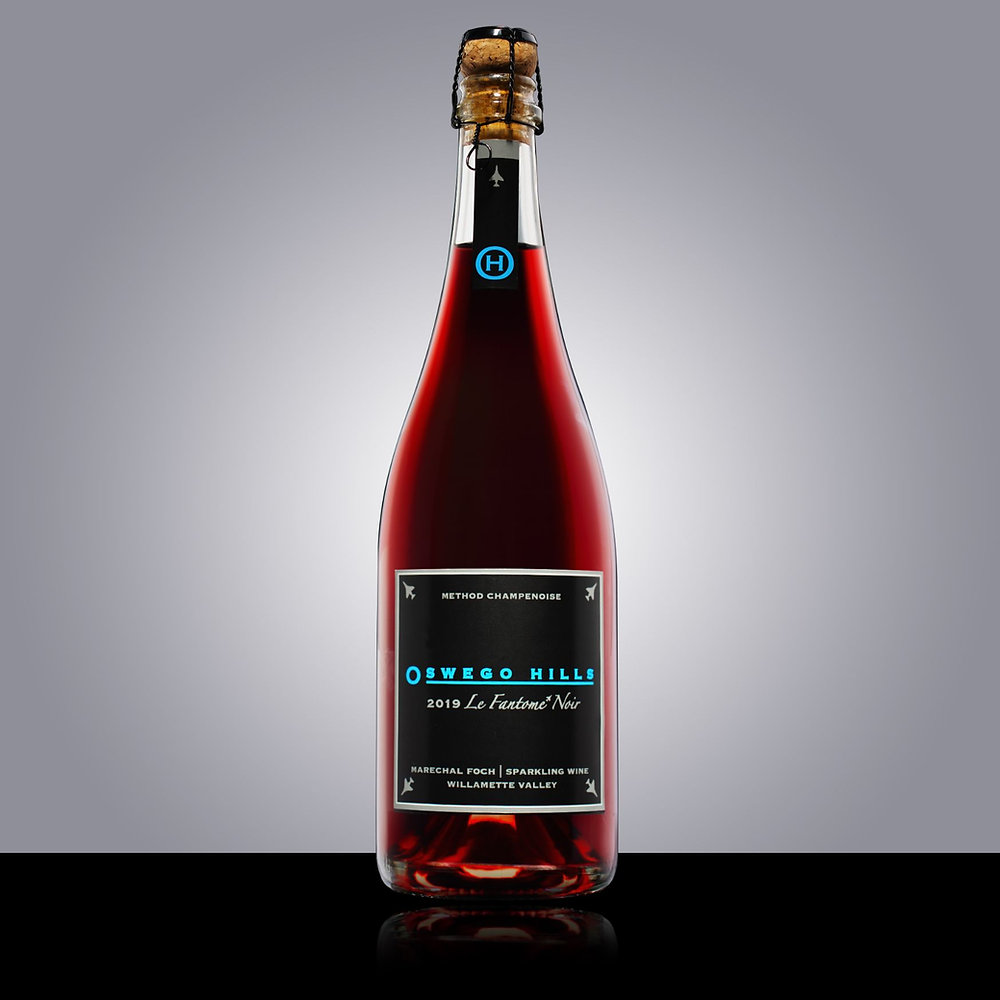
Oswego Hills Le Fantome’ Noir is a Brut style sparkling wine produced by the Traditional Method Champenoise using select Marechal Foch grapes from the southeast slope of our vineyard. Named the “Black Phantom” for its inky color, this sparkling wine is a tribute to our founder and owner for his service to our country as an F4 fighter pilot for the United States Navy.
The beautiful garnet color with continuous bubbles rising through it is reminiscent of lava lamp on overdrive. However, when you experience the tingling acidity and flavors of black cherry, raspberry, currants and spice, you will understand what makes the alluring “Black Phantom” the pinnacle of our sparkling wines. Food pairings include chocolate, robust cheeses, nuts, cured meats, and basically any dessert you want.
Even the occasional cigar or just a stand-alone glass pour of Le Fantome’ Noir may be just the thing you need to be in your happy place.
$50.00 per bottle | $255.00 per 6-pack | $480.00 per case | 85 cases produced
Tempranillo Port (Dessert Wine)
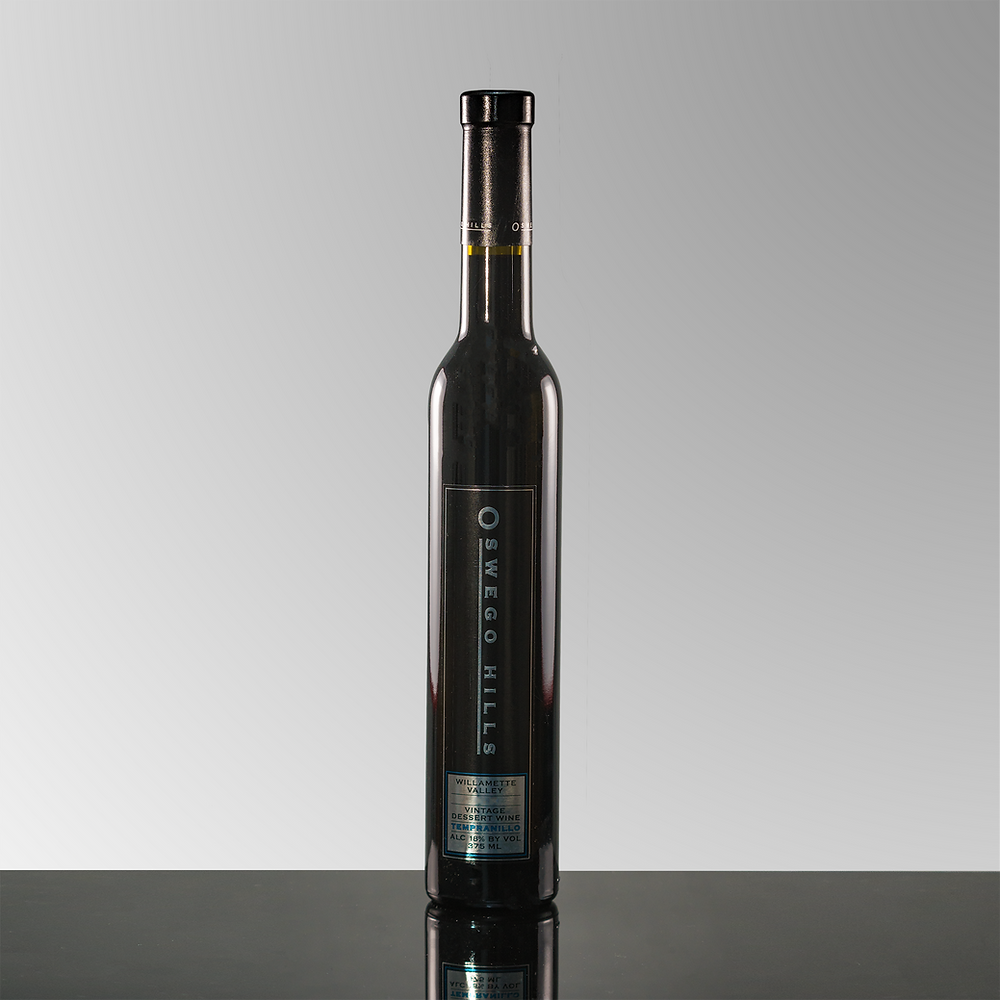
Tempranillo or “Tinta Roriz” is one of the main grapes used on the production of Port. The history of Port can be traced back to the 17th century as wines were shipped via the Dutch trade ships to England. In 1678, England declared war on France, thus creating an instant embargo of the highly desired French wines.
Since Britain had already developed merchant trade with their ally Portugal, the British instantly became more dependent on Portuguese wines. The only problem faced by the British shipping merchants was that the Portuguese wines were inferior to the sought after French wines. Thin & watery to overly astringent pretty much summed up the quality or lack thereof for the wines of Portugal.
The British began to oversee the wine production and the Portuguese wine quality slowly improved. As wines were being prepared to ship, a bucket or two of brandy was added to each barrel to stabilize the wine. Nobody really knows when Port was born but sometime during the late 1600’s to early 1700, someone decided to stop the fermentation with brandy while the wine was still fruity, sweet, and strong.
Since then, Ports have gained recognition and the identity that makes them unique to the Douro Valley of Portugal. Styles such as Ruby, Tawny, Colheita, Single Quinta, and Vintage now characterize the production of Ports. Even though the Port label is specifically designated to the wines of the Duoro Valley, there are several “Port Style” wines being produced worldwide.
These may be referred to as dessert or fortified wines. Our Tempranillo was harvested in late September and aged 20 months in French Oak similar to the traditional vintage ports. The residual sugar is 8% and the alcohol content is 18%.
Sweet, fruity & strong… creating a distinct after dinner aperitif. Classic pairings with port include Stilton cheese, toasted walnuts, berry desserts, dark chocolate and even bon-bons. Due to our limited production, this wine will only be available in small quantities to our wine club and directly through the winery.
$25.00 per bottle | $127.00 per 6-pack | $240.00 per case | 375ml bottle | 48 cases produced